 blog
blog
DIY Lawn Care vs Professional Service: 2026 Cost Guide
Table of Contents
- The Real Cost of DIY Lawn Care: Equipment, Supplies, and Hidden Expenses
- Average Cost of Professional Lawn Care: What You're Paying For
- Time Investment: The Hidden Cost of Weekend Mowing
- Your Lawn Care Maintenance Checklist: What DIY Actually Requires
- Benefits of Professional Lawn Aeration and Other Pro-Only Treatments
- Equipment Storage and Depreciation: The Costs Nobody Talks About
- How to Decide: A Skill-Level and ROI Framework for Homeowners
- Frequently Asked Questions
Last Updated: September 25, 2026
The Real Cost of DIY Lawn Care: Equipment, Supplies, and Hidden Expenses
The DIY lawn care vs professional service decision usually comes down to one question: what does each option actually cost over a full season? Homeowners often underestimate the DIY number for years, because the mower sticker price is only the first expense. Here's the full picture, and the numbers are rarely as one-sided as they look.
Mower, Trimmer, and Blower Purchases
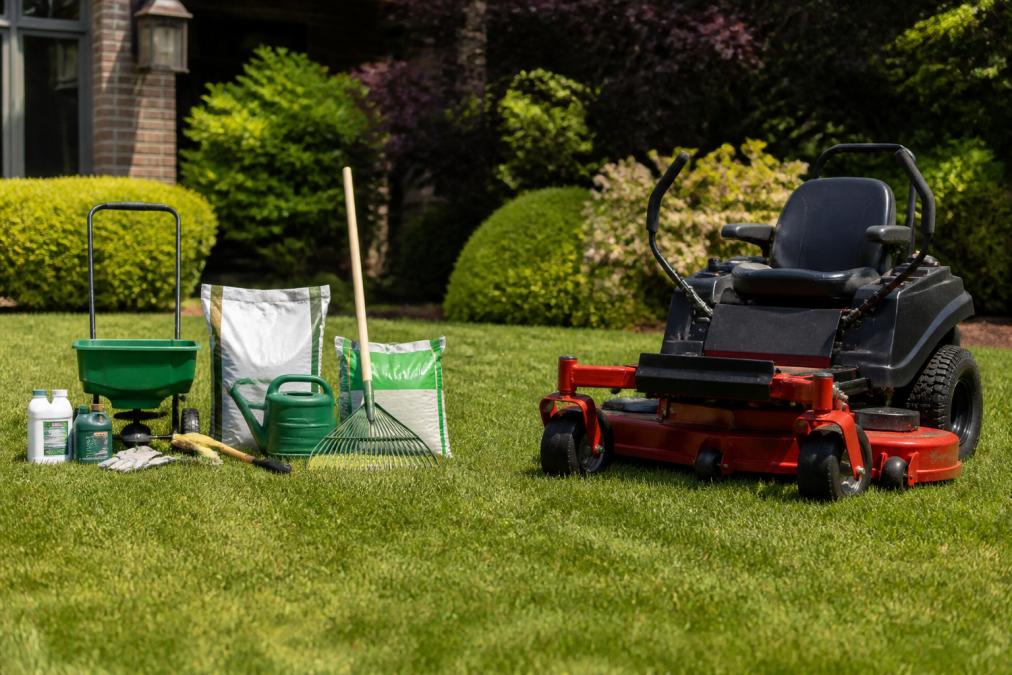
A walk-behind mower, string trimmer, and leaf blower form the basic DIY kit. Entry-level gas mowers sit at the low end, battery models cost more upfront but skip fuel, and a commercial-grade mower can run several times the residential price. Add an edger, hedge trimmer, and safety gear, and the starting investment climbs quickly. U.S. EPA guidance on small engine emissions
Fuel, Maintenance, and Replacement Parts
Gas mowers need fuel, oil, spark plugs, and annual blade sharpening. A dull blade tears grass instead of cutting it, which stresses the lawn and invites disease. Battery mowers trade fuel costs for replacement batteries every few seasons. Either way, the running costs never stop.
Storage and Depreciation: The Line Item Most DIY Math Skips
Two costs almost never make it into a homeowner's spreadsheet, and they are the ones that quietly close the gap with a service contract.
Storage. A mower, trimmer, blower, and edger need covered, dry space, typically a garage bay or a shed. That footprint has a real value. If you are renting a storage unit for the overflow, you are paying monthly for the privilege of owning equipment. If you are giving up a garage bay, you are giving up space you could otherwise use.
Depreciation. Outdoor power equipment is a depreciating asset, not an investment. A gas mower bought this spring is worth a fraction of its purchase price by the time the warranty runs out, and battery packs degrade on a predictable curve regardless of how carefully you store them.
The Environmental Angle Most Comparisons Ignore
This is the part of the DIY vs. professional debate that rarely gets an honest hearing, and it cuts both ways.
- Small gas engines. Per the U.S. EPA, small non-road engines such as lawn mowers and trimmers are a meaningful source of certain air pollutants relative to their size. Running a gas mower for an hour is not the same as running a car for an hour, but it is not nothing either.
- Chemical runoff. Whether you apply fertilizer and weed control yourself or hire it out, over-application is what drives nutrient runoff into storm drains and waterways. A DIYer working from a big-box bag has no soil test telling them the lawn doesn't need phosphorus. A professional program is built around soil testing precisely to avoid that.
- The honest trade-off. A battery mower eliminates tailpipe emissions at the point of use, but the grid still has to charge it and the pack has to be manufactured and eventually recycled. A professional crew mowing several lawns per stop spreads the fuel and equipment footprint across more square footage than one homeowner mowing one lawn.
Average Cost of Professional Lawn Care: What You're Paying For
Professional lawn care pricing depends on lot size, visit frequency, and services included, so the average cost of professional lawn care varies widely by property. Most providers quote either per visit or as an annual contract.
Per-Visit vs. Annual Contract Pricing
Per-visit pricing suits homeowners who want occasional help. Annual contracts bundle mowing, edging, trimming, and seasonal treatments into one predictable rate. Visit a provider's pricing page for current rates, so you can compare a real quote against your DIY math instead of guessing.
| Cost Factor | DIY | Professional Service |
|---|---|---|
| Upfront equipment | Mower, trimmer, blower, edger | None |
| Ongoing costs | Fuel, parts, sharpening | Monthly or per-visit fee |
| Time per week | 1-2 hours | Zero |
| Expertise | Self-taught | Professional experience |
| Results consistency | Varies | Dependable |
The True-Cost ROI Framework: Run Your Own Numbers
Most comparisons stop at "DIY is cheaper upfront, pros are more convenient." That is not a decision, it is a slogan. Here is a structured way to calculate the real break-even point for your property. Fill in your own figures, we are giving you the formula, not a fake number.
Step 1, Total your DIY cost over three seasons.
-
Equipment purchase price (mower + trimmer + blower + edger + safety gear)
-
Fuel or electricity over three seasons
-
Maintenance and parts (oil, plugs, filters, blades, sharpening, batteries)
-
Storage value (monthly storage cost, or a reasonable estimate for the garage space you give up)
-
Depreciation (purchase price minus what you could realistically resell it for after three years)
-
Your time (hours per week × weeks in growing season × three seasons × your hourly value)
-
Annual contract rate × 3, or per-visit rate × expected visits per season × 3
-
Any add-on treatments (aeration, overseeding, grub control) you would otherwise do yourself
Step 3, Compare, then adjust for risk.
DIY wins on cash outlay. Professional wins on total cost of ownership once time, storage, depreciation, and renovation risk are counted. The break-even point is different for every property, which is exactly why you should run the numbers instead of trusting a headline.
Time Investment: The Hidden Cost of Weekend Mowing
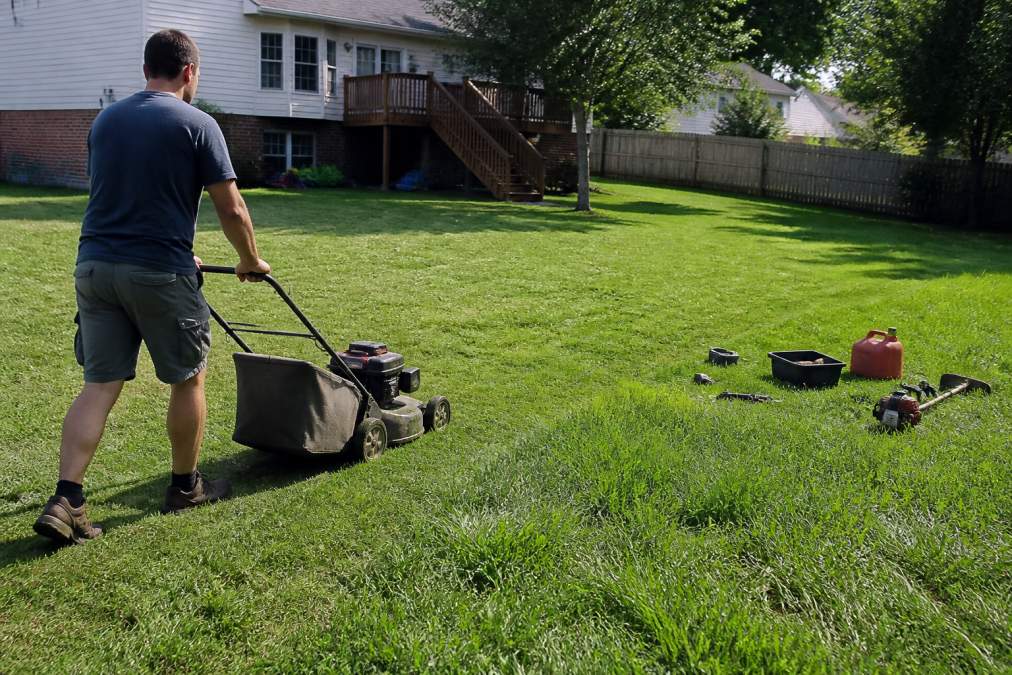
Mowing, trimming, edging, and cleanup typically consume one to two hours weekly during growing season, plus extra time for weeding, fertilizing, and equipment repairs. Over a full season, that adds up to dozens of hours, and it's the cost most DIY calculators ignore entirely.
Your Lawn Care Maintenance Checklist: What DIY Actually Requires
A realistic lawn care maintenance checklist for DIY homeowners includes:
- Mow weekly at the correct height for your grass species
- Sharpen mower blades every 20-25 hours of use
- Trim and edge walkways and beds
- Apply pre-emergent weed control in early spring
- Fertilize on a seasonal schedule matched to soil pH
- Aerate and overseed in fall
- Winterize equipment before the first freeze
- Monitor for pests and turf disease
Most DIYers mow too short. Raising the deck height during summer shades the soil, reduces water loss, and crowds out crabgrass without extra chemicals.
Benefits of Professional Lawn Aeration and Other Pro-Only Treatments
The benefits of professional lawn aeration start with equipment. Core aeration pulls plugs of soil to relieve compaction, and professional machines do it faster and deeper than rental units. Pros also time pre-emergent and fertilization to local climate and grass species, which is where DIY schedules usually fail.
Equipment Storage and Depreciation: The Costs Nobody Talks About
Mowers, trimmers, and blowers need covered storage, and that space has value. Equipment also depreciates fast. A mower bought this spring is worth far less by fall, and every repair bill eats further into the savings DIY was supposed to deliver. Consumer Reports guidance on lawn mower maintenance
How to Decide: A Skill-Level and ROI Framework for Homeowners
Use this simple framework. It cuts through the marketing on both sides.
When DIY Makes Sense
DIY works if you enjoy the work, own the equipment already, have storage, and your lawn is small and simple. In that case, your time is the main cost, and you've decided it's worth spending.
When to Hire a Professional
Hire out if your schedule is tight, your lawn is large or oddly shaped, or you want consistent results without the equipment overhead. A full lawn care program can help prevent the costly renovation that follows years of skipped treatments.
Frequently Asked Questions
Is lawn care considered a professional service?
Yes. Lawn care is a professional service when provided by trained technicians who handle fertilization, weed control, aeration, and pest management. These providers carry state-required pesticide applicator licenses and follow local regulations. DIY lawn care is a homeowner activity, not a professional service, though the two can overlap when homeowners buy professional-grade products. The distinction matters for liability, consistency, and results.
What is the 1/3 rule in lawn care?
The 1/3 rule says never remove more than one-third of a grass blade's height in a single mowing. Cutting more stresses the lawn, weakens roots, and invites weeds. If your grass is 4 inches tall, mow down to 3 inches, not 2. Professional crews follow this rule on every visit by adjusting deck height to current growth. DIY homeowners often skip a week and then cut too short, which causes yellowing and thinning.
Does professional lawn care save money in the long run?
It can. DIY costs include mower purchase, fuel, maintenance, and your time. Professional services bundle mowing, fertilization, weed control, and aeration into one contract. Over several years, professional care often costs less than replacing dead grass, treating disease, or renovating a neglected lawn. The break-even point depends on your lawn size, local climate, and how much you value your weekends. Request a quote from a provider to compare specific numbers.
Is $200 a month for lawn care a reasonable price?
Pricing depends on lawn size, services included, and local market rates. A $200 monthly plan typically covers mowing, edging, and trimming for a standard suburban lot, with fertilization and weed control as add-ons. Larger properties, steep slopes, or comprehensive programs cost more. The best way to know if a price is fair is to compare quotes from multiple providers and check what each one includes. Visit a provider's pricing page for current rates.
The real challenge isn't picking a side. It's calculating your true cost, including time, storage, and depreciation, before you commit. EarthWise Lawn and Landscape LLC brings more than 30 years of hands-on experience, professional equipment, proper mowing heights with sharp blades, and thoughtful, varied mowing patterns to every property. Get a quote from EarthWise Lawn and Landscape LLC and keep your yard consistently clean, healthy, and well-maintained.