 how-to
How Often Should Lawn Be Mowed: A Guide
Table of Contents
- How Often Should Lawn Be Mowed: The Basics
- Understanding the One-Third Rule
- Lawn Mowing Height Chart by Grass Species
- Seasonal Mowing Frequency: Spring, Summer, and Fall
- Best Time of Day to Mow Lawn
- Mulching vs Bagging Grass Clippings
- Signs Your Lawn Needs Mowing and Common Mistakes
- Conclusion
- Frequently Asked Questions
Last Updated: September 27, 2026
How Often Should Lawn Be Mowed: The Basics
How often should lawn be mowed depends on your grass type, season, and growth rate. At EarthWise Lawn and Landscape LLC, we follow a simple principle: mow when your grass reaches the right height, not on a fixed schedule.
The real driver is growth, not a fixed schedule. During peak season, your lawn might need cutting twice weekly; in slow months, every two weeks works fine.
Weather, soil moisture, and fertilization all affect growth rate and mowing frequency.
Understanding the One-Third Rule
The one-third rule is the single most important principle in lawn care. Never cut more than one-third of the grass blade in a single mowing. This rule prevents scalping, maintains root development, and keeps your turf dense and healthy.
Here's how it works in practice. If your grass species should be maintained at 3 inches tall, you mow when it reaches 4.5 inches. You remove 1.5 inches, leaving 3 inches of blade behind. This preserves the plant's ability to photosynthesize and recover quickly.
Break the one-third rule and you'll see the damage immediately:
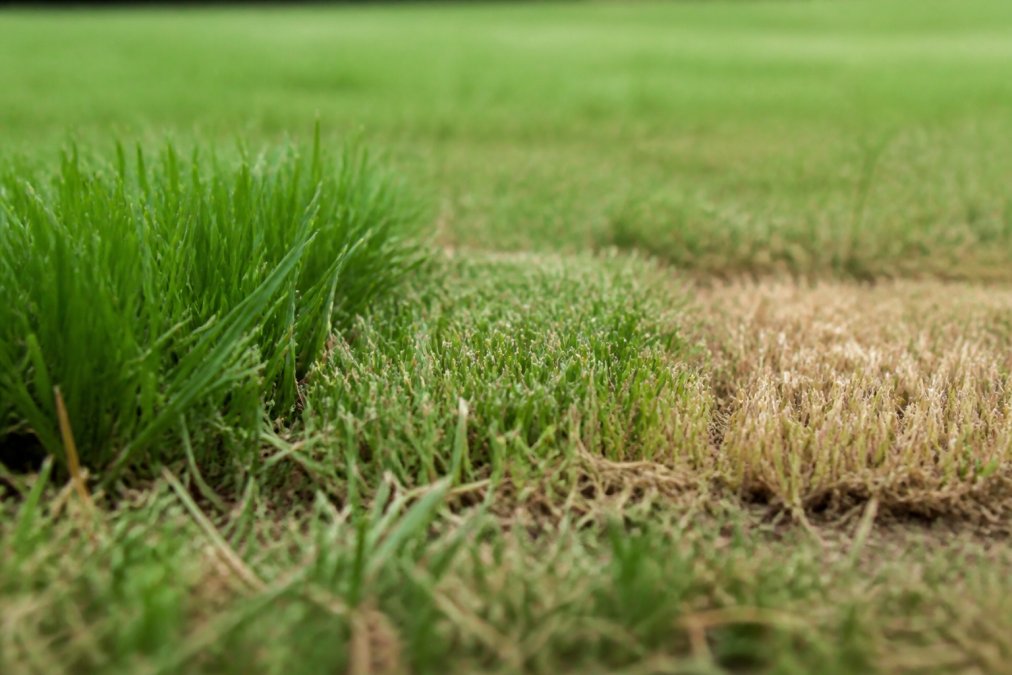
- Scalped grass turns brown within days
- Root systems weaken from stress
- Weeds move in to fill bare patches
- Your lawn takes weeks to bounce back
Lawn Mowing Height Chart by Grass Species
Different grass species have different ideal heights, but the reason matters: proper height suppresses weeds, protects soil, and matches the plant's physiology. Cutting the wrong height for your grass type weakens turf and invites weed invasion.
Cool-season grasses (Kentucky bluegrass, perennial ryegrass, tall fescue) thrive at 2.5-3.5 inches. Taller grass shades soil, reduces drought stress, and blocks light from reaching weed seeds, preventing crabgrass and broadleaf weeds.
Warm-season grasses (Bermuda, Zoysia, St. Augustine) prefer 1.5-2.5 inches. They grow laterally via runners and maintain density at lower heights, suppressing weeds through dense lateral growth.
Grass height controls light penetration to soil. At 2.5+ inches, cool-season turf blocks 85-90% of light, preventing weed seed germination. Cutting below 2.5 inches allows light through, and weed seeds germinate within 7-10 days.
| Grass Species | Ideal Height | Growth Pattern | Weed Suppression |
|---|---|---|---|
| Kentucky bluegrass | 2.5-3.5 inches | Vertical + rhizomes | Excellent at 3+ inches |
| Perennial ryegrass | 2.5-3.5 inches | Vertical | Good at 2.5+ inches |
| Tall fescue | 3-3.5 inches | Vertical + deep roots | Excellent at 3+ inches |
| Bermuda grass | 1.5-2.5 inches | Lateral runners | Good at 1.5+ inches |
| Zoysia grass | 1.5-2 inches | Lateral runners | Excellent at 1.5+ inches |
| St. Augustine grass | 2-2.5 inches | Lateral runners | Good at 2+ inches |
Soil type influence on mowing height:
- Clay soils: Maintain the higher end of your species' height range to maximize photosynthesis and reduce compaction stress.
- Sandy soils: Maintain the lower end of your range; grass recovers quickly and shorter height reduces fungal disease risk.
- Loamy soils: Maintain the middle of your range for balanced weed suppression and appearance.
Post-fertilization height adjustments: After nitrogen fertilization, increase mowing frequency by 25-30% for 2-3 weeks but maintain the same cutting height. Mow more often at the same height to follow the one-third rule; lowering height during a growth spike causes severe stress.
If you don't know your grass species or soil type, contact your local extension office or request a soil test. Once you know what you're growing, stick to that species' height range and adjust for soil conditions.
Seasonal Mowing Frequency: Spring, Summer, and Fall
Mowing frequency changes dramatically across seasons because grass growth rate changes. Understanding these seasonal shifts prevents both over-mowing and under-mowing.
Spring is peak growing season for cool-season grasses. Mow twice weekly during April and May at 2.5 inches to remove winter dormancy. Gradually raise your mower deck as temperatures rise.
Summer: Cool-season grasses slow in heat above 80°F; mow every 10-14 days at 3.5 inches to shade soil and reduce stress. Warm-season grasses peak; mow every 5-7 days at 1.5-2 inches.
Fall brings a second growth surge for cool-season grasses. Mow every 7-10 days through September and October at 3 inches to build density and root strength for winter survival.
| Season | Cool-Season Grasses | Warm-Season Grasses | Frequency |
|---|---|---|---|
| Spring | 2.5-3 inches | 1.5-2 inches | 1-2x weekly |
| Summer | 3-3.5 inches | 1.5-2 inches | Every 10-14 days |
| Fall | 3-3.5 inches | 1.5-2 inches | Every 7-10 days |
Best Time of Day to Mow Lawn
The best time to mow depends on soil moisture, weather stress, and growth stage, not just dew and temperature.
Mow late morning or early afternoon after dew evaporates but before peak heat. Wet grass clumps in the deck, clippings mat, and wet soil compacts under mower weight. Wait 24 hours after heavy rain.
Avoid mowing in heat above 85°F. If necessary, mow early morning (6-8 AM) to allow recovery before peak temperatures.
During drought or heatwaves, mow only in early morning and less frequently. Raise your mower deck by half an inch and extend intervals by 3-5 days to preserve leaf blade surface area and reduce water loss.
Check soil moisture before mowing. Squeeze soil from 3-4 inches deep; if it forms a tight ball, soil is too wet. Sandy soils dry faster than clay; wait an extra day after rain on clay-based lawns.
Growth-stage timing: Mow when grass is actively growing, not during dormancy or stress. Cool-season grasses grow fastest in spring (April-May) and fall (September-October). During these periods, mow in late morning or early afternoon when the plant has energy to recover. During summer dormancy or drought stress, shift to early morning mowing only, and reduce frequency. Warm-season grasses peak in summer heat; mow every 5-7 days in early morning to avoid heat stress on freshly cut blades.
Mulching vs Bagging Grass Clippings
Mulching and bagging serve different purposes. Understanding when to use each approach keeps your lawn healthier and saves you work.
Mulching means leaving clippings on the lawn to decompose. This returns nitrogen to soil, improves moisture retention, and builds organic matter. Mulching reduces your workload and feeds your lawn at the same time. It's the right choice for 90% of mowing situations.
The only requirement for successful mulching is sharp blades and proper mowing height. Dull blades tear grass instead of cutting it cleanly. Torn clippings don't decompose efficiently and mat together.
Bagging makes sense in specific situations:
- When clippings are excessively long (you've waited too long between mowings)
- When disease is present in your lawn
- When you're removing excessive thatch buildup
- When clippings are visibly coarse and slow to decompose
Signs Your Lawn Needs Mowing and Common Mistakes
Visual cues that mowing is due:
- Grass appears noticeably taller than your target height
- Seed heads are visible (the lawn is about to flower)
- The turf looks shaggy or uneven
- You can see bare soil between grass blades
Mowing too short scalps the lawn and removes too much leaf blade. Recovery takes weeks. Weeds invade the bare patches. Roots weaken from stress. This is the single most damaging mistake homeowners make.
Conclusion
How often should lawn be mowed comes down to one principle: cut when growth requires it, not when a calendar says so. The one-third rule keeps your turf healthy and dense. Proper mowing height for your grass species prevents stress and weed invasion. Seasonal adjustments match your lawn's natural growth rhythm.
Frequently Asked Questions
What is the one-third rule for mowing?
The one-third rule states you should never remove more than one-third of the grass blade length in a single mowing. This preserves the plant's ability to photosynthesize and recover quickly. For example, if your grass is 3 inches tall, cut it to 2 inches. Cutting more than one-third can stress the turf, weaken root development, and increase weed suppression challenges. This principle applies across all grass species and seasons.
How does mowing frequency change based on the season?
During peak growing season in spring and summer, cool-season grasses typically need mowing weekly or every 5-7 days. Warm-season grasses peak in summer and may need weekly mowing then. Fall and spring transitions require more frequent mowing as growth rates accelerate. Winter dormancy slows growth significantly, reducing mowing frequency or stopping entirely. Soil moisture and nitrogen uptake also vary seasonally, affecting how quickly grass grows and when you'll need to mow.
Is it better to leave grass clippings on the lawn or bag them?
Mulching (leaving clippings) is generally better for lawn health. Grass clippings return nutrients to the soil, reducing the need for additional fertilization and supporting nitrogen uptake. Mulching also improves soil moisture retention and turf density. However, bag clippings if the lawn is excessively wet, clippings are long, or you're dealing with visible disease. For most homeowners during active growing season, mulching supports better lawn maintenance and aesthetics without extra work.
What happens if you wait too long between mowings?
Delaying mowing beyond the recommended frequency causes several problems. Grass becomes overgrown, making it harder to cut evenly and increasing scalping risk. Long grass weakens root development and reduces lawn density, creating space for weeds to establish. Overgrown lawns also look unkempt and affect your property's curb appeal. Additionally, cutting too much at once violates the one-third rule, stressing the plant and slowing recovery. Regular mowing maintains turf health, prevents weed suppression issues, and keeps your lawn looking polished.