 How-to
Lawn Mowing Patterns for Thick Grass That Cut Clean
Last Updated: November 12, 2026
Quick Summary
The best lawn mowing patterns for thick grass are back-and-forth rows with alternating directions, diagonal cuts, and occasional crosshatch passes. Straight passes keep the deck moving through dense turf and produce clean, visible lines, while decorative curves cut poorly in heavy growth.
- Alternate your mowing axis every cut, going north to south one week and east to west the next.
- Never cut more than one-third of the grass blade in a single pass on dense turf.
- Set the deck at the top of the recommended height range for your grass type.
- Make wide, sweeping turns at the lawn edge instead of pivoting a zero turn in place.
- Bring overgrown grass down over two or three cuts spaced a few days apart.
Table of Contents
- Why Thick Grass Changes How You Mow
- The Best Lawn Mowing Patterns for Thick Grass
- The 1/3 Rule of Mowing and Why It Matters More in Dense Turf
- Setting the Best Mowing Height for Thick Grass
- Mowing Patterns With Zero Turn Mowers on Dense Lawns
- How to Mow Straight Lines and Keep Patterns Clean
- Managing Clumps, Clogging, and Clippings in Thick Grass
- Get a Quote for Patterned Mowing That Handles Thick Grass
- Frequently Asked Questions
Why Thick Grass Changes How You Mow
Thick grass is a different animal. A dense, healthy lawn looks great from the street, but it fights back against a mower set up for average turf. Blades bend instead of cutting clean.
Here's what most guides get wrong. They teach patterns as if all lawns mow the same. They don't. Dense grass needs sharper blades, a higher cutting height, and a plan for all that extra material.
Three things change when turf gets thick:
- Blade resistance goes up. Dense grass pushes back, so dull blades tear instead of slice.
- Clipping volume climbs. More grass means more clippings, and clumps smother the lawn.
- Pattern matters more. A pattern that hides imperfections in thin grass can expose them in thick grass.
Get these right and the lawn looks striped and sharp. Get them wrong and you get a brown, clumped mess.
The Best Lawn Mowing Patterns for Thick Grass
The best lawn mowing patterns for thick grass are back-and-forth rows with alternating directions, diagonal cuts, and crosshatch passes.
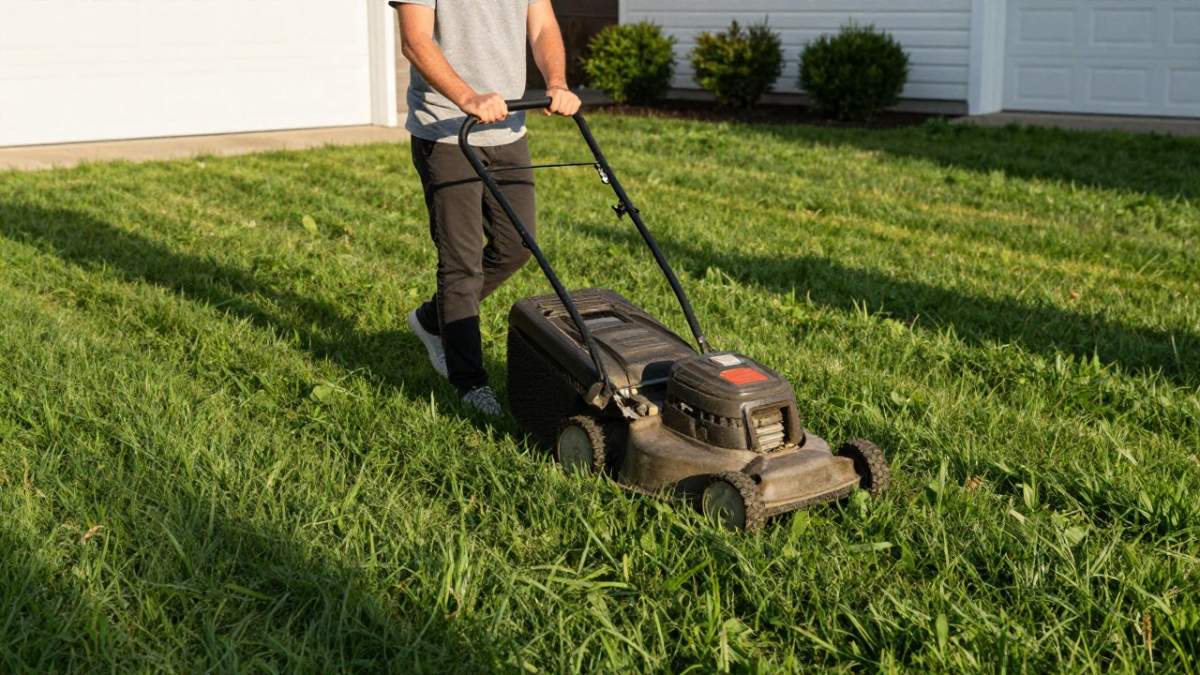
Pattern choice in dense turf is really a decision about three things: how much the deck has to work, how often you turn, and whether the terrain lets you hold a straight line. Use this order of operations.
**1.
2. Alternate the axis every cut. Mow north to south one week, east to west the next.
**3.
4. Reserve crosshatch for occasional cuts. Crosshatch is two diagonal passes at right angles, producing a checkerboard effect.
**5.
- Square or rectangular lawn: back-and-forth rows, then diagonals, then crosshatch as an occasional change.
- Long, narrow strip: run rows along the long axis so you turn less often.
- Irregular or heavily planted yard: break the lawn into simple rectangular zones and mow each zone with straight rows, rather than trying to trace one continuous decorative pattern around beds and trees.
- Sloped ground: mow across the slope rather than up and down where conditions allow, and keep the pattern simple so you are not making sharp turns on a grade.
6. Keep the deck high and the engine at full speed. Pattern only helps if the mower is actually cutting.
Back-and-Forth Rows and Alternating Directions
Back-and-forth mowing means running straight rows across the lawn, turning at the edge, and coming back alongside the last pass. Overlap each pass by a few inches so no strip of grass gets missed. The real trick with thick grass is changing direction each time you mow.
Why does that matter? Grass blades lean in the direction you mow. Alternate directions and the blades stand up straighter, which means a cleaner cut and fewer ruts. It also spreads wear on the turf.
Diagonal and Crosshatch Patterns
Diagonal patterns run at an angle across the lawn. Crosshatch patterns are two diagonal passes at right angles, which creates a checkerboard effect. Both work well on thick grass because they force the mower through the turf at a fresh angle.
A few practical notes:
- Diagonals look sharp on square or rectangular lawns.
- Crosshatch takes longer, so save it for a special occasion.
- On dense turf, keep the deck high and the engine at full speed.
The 1/3 Rule of Mowing and Why It Matters More in Dense Turf
The 1/3 rule of mowing says never cut more than one-third of the grass blade in a single pass. In thick grass, this rule is not optional. Dense turf grows fast, and cutting too much at once shocks the plant and leaves heavy clippings behind.
Here's how it plays out. If you need a refresher on timing, our guide on how often lawn should be mowed explains the schedule that keeps the 1/3 rule realistic.
A common mistake is mowing short to stretch the time between cuts. That backfires on thick grass. Scalping exposes the soil, invites weeds, and leaves the lawn looking patchy for weeks.
Setting the Best Mowing Height for Thick Grass
The best mowing height for thick grass is the top of the recommended range for your grass type, not the bottom. Taller blades shade the soil, crowd out weeds, and develop deeper roots.
General ranges to work from:
- Cool-season grasses such as tall fescue and Kentucky bluegrass: roughly 3 to 3.5 inches.
- Warm-season grasses such as Bermuda and zoysia: roughly 1.5 to 2.5 inches.
- St. Augustine: roughly 3 to 4 inches.
Set the deck at the high end and check it on a flat surface before you start. For exact numbers by grass type, see our guide to proper lawn mowing heights.
Set the deck at the top of the recommended range for your grass type, then check it on a flat surface before you start.
| Grass type | Recommended height | Note |
|---|---|---|
| Cool-season grasses (tall fescue, Kentucky bluegrass) | Roughly 3 to 3.5 inches | Set deck at the high end |
| Warm-season grasses (Bermuda, zoysia) | Roughly 1.5 to 2.5 inches | Set deck at the high end |
| St. Augustine | Roughly 3 to 4 inches | Set deck at the high end |
Recommended height
Mowing Patterns With Zero Turn Mowers on Dense Lawns
Mowing patterns with zero turn mowers on dense lawns follow the same logic as any mower, but the machine changes the details. A zero turn can pivot in place, which makes tight turns easy. That same agility can also tear turf if you spin on wet, thick grass.
Use these habits:
- Make wide, sweeping turns at the lawn edge instead of sharp pivots.
- Slow down in heavy growth so the deck can keep up.
- Run at full throttle and adjust ground speed, not engine speed.
- Keep the deck level and the blades sharp.
Zero turns shine on large, open lawns with thick grass. On tight, oddly shaped yards, plan your rows so you spend less time turning and more time cutting.
How to Mow Straight Lines and Keep Patterns Clean
Straight lines come from a fixed reference point, not from watching the deck. Pick a tree, a fence post, or a seam in the driveway and drive toward it. Then keep your first row straight, because every row after it follows that line.
Follow these steps:
- Pick a fixed landmark at the far end of the lawn.
- Mow the first row slowly and check it from the edge.
- Overlap each pass by a few inches.
- Turn at the same point on every pass.
- Alternate your starting side each time you mow.
Clean edges finish the look. Our step-by-step guide on how to edge a lawn shows how to trim borders so your pattern lines read sharp from the street.
Managing Clumps, Clogging, and Clippings in Thick Grass
Clumps and clogging are the number one complaint on dense lawns. Thick grass produces more clippings than the deck can scatter, and wet clippings bind together fast. The fix is a mix of timing, equipment, and technique, and a staged plan for grass that has gotten ahead of you.
Bring overgrown grass down in stages
The single biggest cause of clumping is removing too much leaf at once. When you cut more than about one-third of the blade height, the clippings are too long for the deck to chop and disperse, so they mat on the surface and smother the grass underneath.
A common pattern is to drop the deck one notch per cut until you reach your target height, mowing in a different direction each time. That keeps clipping volume per pass manageable and gives the lawn time to recover between cuts.
Set up the equipment for dense grass
- Sharp blades. Dull blades tear rather than slice, and torn tips turn brown. Sharpen or swap blades regularly during heavy growth season.
- Deck height. Raise the deck one notch in heavy growth; a higher cut leaves shorter clippings relative to the deck's capacity and reduces bogging.
- Engine speed. Run full throttle and control ground speed separately. A slower pass gives the deck time to chop and disperse clippings instead of dumping them in rows.
- Discharge and mulching setup. A mulching blade or a bagger helps when clumps persist; side discharge is fine for light growth but can leave rows in dense turf.
- Deck cleanliness. Clean under the deck after each mow. Caked grass reduces airflow and is a leading cause of clogging.
Troubleshoot clogs and clumps
- Wet clippings binding together: mow when the grass is dry, ideally late morning after dew lifts.
- Rows of clumps behind the mower: slow your ground speed or raise the deck a notch.
- Deck bogs down and the engine note drops: you are cutting too much at once, raise the deck and take another pass later.
- Uneven discharge from the chute: check for a partially blocked chute and clear it before continuing.
Watch out: never reach under a running deck or clear a clog with the engine on. Shut the mower off, wait for the blades to stop, and disconnect the spark plug boot before clearing a blocked chute or deck.
If clippings still pile up after these adjustments, the lawn has simply grown past what a single pass can handle. Go back to the staged approach: raise the deck, cut, and come back a few days later at a lower setting.
Get a Quote for Patterned Mowing That Handles Thick Grass
Thick grass rewards a mower who knows how to read it. The right pattern, the right height, and the right equipment turn a dense lawn into a striped showpiece instead of a clumped mess.
EarthWise Lawn and Landscape LLC brings more than 30 years of hands-on experience to every property.
Ready to stop fighting your own lawn? Learn how to get professional lawn maintenance quotes and see what a consistent, dependable schedule looks like.
Frequently Asked Questions
What is the best way to mow thick grass?
Cut thick grass in overlapping passes and alternate your direction each time you mow. Set the deck high enough to remove no more than one-third of the blade, and slow your ground speed so the mower can process the extra volume. Sharp blades matter more in dense turf because dull ones tear rather than slice, leaving ragged tips that brown and invite stress. If the grass is very tall, take a first pass at a higher setting and a second pass lower rather than forcing the mower through in one go.
What is the 1/3 rule of mowing?
The 1/3 rule of mowing means you never remove more than one-third of the grass blade in a single cut. On thick grass this rule matters more, not less, because dense turf holds more moisture and recovers slower from a heavy cut. If your grass is 4 inches tall, set the deck to about 2.7 inches or higher and cut only the top third. Following the rule keeps roots shaded, reduces stress, and cuts down on the clumping that comes with cutting too much at once.
What is the most efficient mowing pattern for a thick lawn?
A back-and-forth pattern with slight overlap is the most efficient for thick grass, especially on rectangular lawns. Run parallel rows, overlap each pass by a few inches so no strip is missed, and turn at the edge rather than in the middle of the lawn. Alternate the direction each mowing, switching between horizontal, vertical, and diagonal rows. This spreads wear on the grass, keeps the stripes looking sharp, and stops the same wheel tracks from compacting the soil week after week.
How often should you change your mowing pattern?
Change your mowing direction every time you mow, which for most lawns means once a week during the growing season. Rotating between back-and-forth, diagonal, and crosshatch patterns keeps grass blades standing upright instead of being pushed flat in one direction. It also prevents ruts and soil compaction along the same lines. If you use a zero-turn mower, vary the turning points too, since repeated turns in the same spot can scalp thick grass and wear the turf down.