 How-to
How to Maintain Healthy Lawn Grass: 2026 Guide
Table of Contents
- How to Maintain Healthy Lawn Grass: Core Steps
- How Often Should Lawn Be Mowed?
- Lawn Mowing Height: The 1/3 Rule That Protects Roots
- How Often to Water Lawn for Deep Root Development
- Build a Year-Round Lawn Care Schedule
- Fix Common Lawn Problems: Disease, Compaction, and Weeds
- Keep Your Mower Running Sharp: Equipment Maintenance
- Conclusion
- Frequently Asked Questions
Last Updated: October 9, 2026
How to Maintain Healthy Lawn Grass: Core Steps
Learning how to maintain healthy lawn grass starts with two things most homeowners skip: a soil test and knowing your grass type.
At EarthWise Lawn and Landscape LLC, we have spent more than 30 years watching lawns succeed and fail for the same handful of reasons. The failures almost never come from bad luck.
Here is the honest truth: your lawn is a system. Soil feeds roots. Roots feed blades. Blades need the right cut height to shade out weeds.
So before you buy another bag of fertilizer, do these two steps first.
Test Your Soil Before Anything Else
A soil test tells you your pH and which nutrients you are missing. Without it, you are fertilizing blind.
Most state extension services offer low-cost soil tests, and the USDA National Institute of Food and Agriculture extension resources can point you to your local lab. You will learn your soil pH and your levels of nitrogen-phosphorus-potassium, the three main nutrients grass needs.
- Low pH? Add lime to raise it.
- High pH? Add sulfur or organic matter.
- Poor soil? Mix in compost to build organic matter.
A common mistake is skipping this step and dumping on fertilizer. That wastes money and can burn your lawn.
Know Whether You Have Cool-Season or Warm-Season Grass
Your grass type decides your entire care calendar. Cool-season grasses like fescue and bluegrass grow fastest in spring and fall. Warm-season grasses like Bermuda and zoysia thrive in summer heat and go dormant in winter.
Get this wrong and you will water and feed at the worst possible time. The USDA Plant Hardiness Zone Map shows which grasses suit your region.
How Often Should Lawn Be Mowed?
Mow your lawn every 7 to 10 days during peak growing season. In slow-growth months, stretch it to every 14 days. The rule is simple: never remove more than one-third of the blade at once.
Frequency matters more than most people think. Scalping your lawn stresses the roots and invites weeds.
Here is a quick guide:
| Season | Mowing Frequency | Grass Activity |
|---|---|---|
| Spring | Every 7-10 days | Fast growth |
| Summer | Every 7-14 days | Moderate to fast |
| Fall | Every 10-14 days | Slowing down |
| Winter | As needed | Dormant |
Lawn Mowing Height: The 1/3 Rule That Protects Roots
The 1/3 rule means you never cut more than one-third of the grass blade in a single mow. Taller blades shade the soil, block weeds, and grow deeper roots.
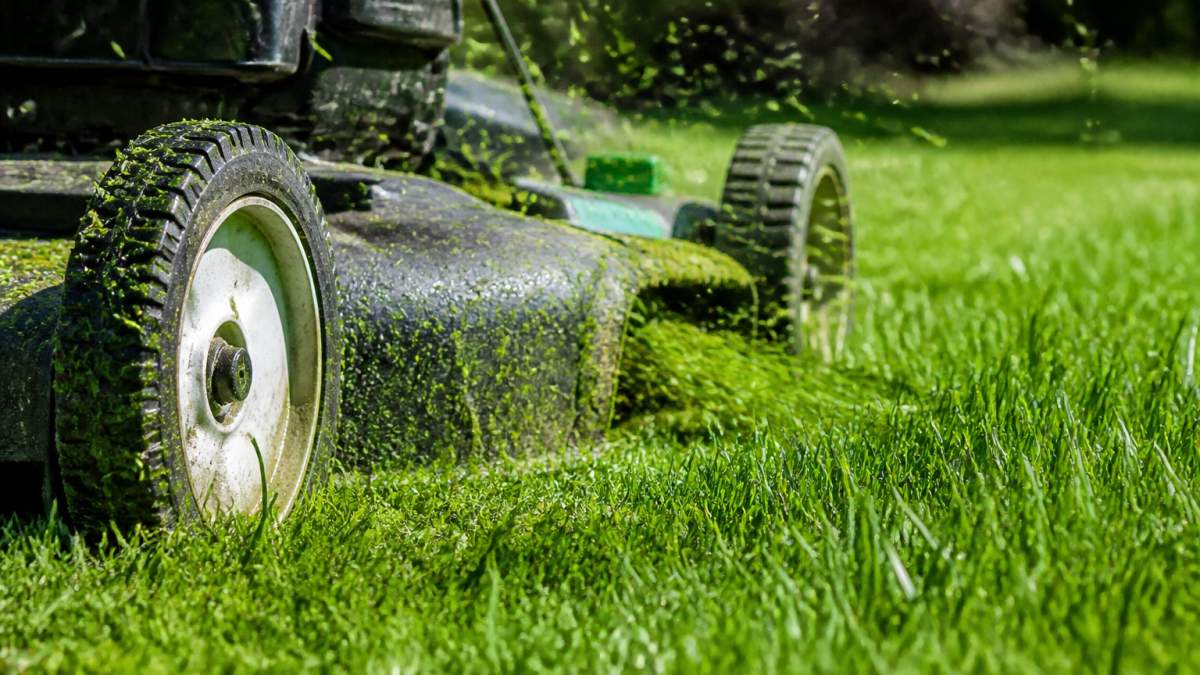
Set your lawn mowing height higher than you think. Most cool-season grasses do best at 3 to 3.5 inches. Warm-season grasses prefer 1.5 to 2.5 inches.
Leave the grass clippings on the lawn. They break down and return nitrogen to the soil, a practice called grasscycling. This cuts your fertilizer needs and saves you bagging time.
How Often to Water Lawn for Deep Root Development
Water your lawn once or twice a week, giving it about 1 inch of water each time. Deep watering pushes roots downward, making grass more drought tolerance ready.
Shallow, daily watering does the opposite. It trains roots to stay near the surface, where they dry out fast.
Follow these steps:
- Water early in the morning to reduce evaporation.
- Check your irrigation coverage with a few tuna cans.
- Aim for 1 inch per session, once or twice weekly.
- Skip watering if rain already delivered an inch.
Build a Year-Round Lawn Care Schedule
A lawn maintenance schedule keeps you ahead of problems instead of reacting to them. The EPA WaterSense watering guide recommends adjusting your watering with the seasons, and most state extension services publish the same core principle: time your tasks to your grass's growth cycle, not the calendar on your wall.
That is why a single national schedule fails. A lawn in a cold northern zone and a lawn in a hot southern zone are on completely different clocks. Anchor your schedule to the USDA Plant Hardiness Zone Map first, then adjust for your grass type.
Cool-Season Grasses (Fescue, Bluegrass, Ryegrass)
These grasses do their heaviest growing in spring and fall and slow down or go semi-dormant in summer heat.
- Early spring: Soil test if you have not in 2-3 years. Apply a pre-emergent weed preventer when soil temperatures consistently reach about 55°F, forsythia blooming is a common visual cue. Hold off on heavy nitrogen until you have mowed twice.
- Late spring: Raise mowing height to 3-3.5 inches as heat arrives. Water deeply once or twice a week rather than daily.
- Summer: Minimize fertilizer. Focus on deep, infrequent watering and watch for disease in humid stretches. Do not scalp, tall blades shade the soil.
- Early fall: This is your most important window. Aerate, overseed thin areas, and apply a slow-release fertilizer. Soil is still warm, air is cooler, and weeds are less competitive.
- Late fall: A final fertilizer application while grass is still green helps root storage through winter. Keep mowing until growth stops.
- Winter: Stay off frozen or saturated turf. Service equipment and sharpen blades now.
Warm-Season Grasses (Bermuda, Zoysia, St. Augustine, Centipede)
These grasses green up late, thrive in heat, and go dormant after the first hard frost.
- Late spring: Once green-up is complete and the threat of frost has passed, apply your first fertilizer. This is also the window for dethatching and, if needed, overseeding with a warm-season variety.
- Summer: Peak growth. Mow frequently at the correct height for your species, water deeply once or twice a week, and scout for chinch bugs and grubs.
- Early fall: Apply a slow-release fertilizer to build reserves before dormancy. Reduce mowing frequency as growth slows.
- Winter: Dormant turf needs almost no water. Avoid traffic on frozen grass, which can fracture blades and crowns.
A Chemical-Free Version of the Same Calendar
If you want to skip synthetic products, the structure stays the same, only the inputs change. This is the organic calendar most guides mention but rarely spell out.
- Spring: Top-dress with 1/4 to 1/2 inch of compost instead of a synthetic fertilizer. Apply corn gluten meal as a pre-emergent where local extension guidance supports it.
- Summer: Leave clippings (grasscycling) to recycle nitrogen. Water deeply. Hand-pull or spot-treat weeds with horticultural vinegar on a sunny, dry day.
- Fall: Overseed with a quality seed blend matched to your zone. Spread compost again. This is the single highest-return organic task of the year.
- Winter: Mulch fallen leaves into the lawn with a mower instead of bagging them, they break down into free organic matter.
Fix Common Lawn Problems: Disease, Compaction, and Weeds
Most lawn problems trace back to one of three causes: soil compaction, disease, or weak turf that lets weeds win. Fix the cause, not just the symptom. The fastest way to do that is to read the symptom like a diagnostic clue.
Start With a Symptom-to-Cause Check
Before you buy a product, match what you see to what is likely happening.
- Brown spots in a ring or patch that grows outward: often a fungal disease such as brown patch or dollar spot, especially in humid weather with evening watering. Water in the morning instead, reduce nitrogen, and improve airflow.
- Brown spots that follow a mower path or overlap: usually dull-blade damage or scalping, not disease. Sharpen the blade and raise the deck.
- Irregular brown patches that pull up like carpet: a strong sign of grubs feeding on roots. Dig a square foot of turf at the edge of the patch and look for white, C-shaped larvae in the top 2 inches of soil.
- Yellowing that spreads along a wall or driveway: often heat or drought stress from reflected heat and compacted soil. Deep-water and consider aerating that zone.
- Thin, patchy turf with no obvious pest: usually compaction, shade, or poor soil. A soil test and a core aeration will tell you more than any spray.
- Weeds that keep returning after spraying: a sign the underlying turf is too weak to compete. Fix fertility, pH, and mowing height first.
Aeration, Dethatching, and Overseeding
Aeration pulls small plugs from the soil to relieve compaction, letting water, air, and roots move deeper. Dethatching removes the dead layer of stems and roots that blocks water and air from reaching soil. Overseeding fills bare spots with fresh grass so weeds have less room.
Do all three in early fall for cool-season grasses, soil is warm, air is cool, and weed pressure is low. For warm-season grasses, late spring into early summer works best, once green-up is complete. Aerate when soil is moist but not saturated; plugs should pull cleanly rather than smear.
Organic and Sustainable Alternatives
Organic lawn care builds soil health instead of relying on quick chemical fixes. Compost and mulching feed the soil food web, which in turn feeds your grass.
- Use slow-release organic fertilizers such as composted manure or kelp-based blends.
- Leave clippings to recycle nitrogen, this can meaningfully reduce how much fertilizer you need.
- Spot-treat weeds instead of blanket spraying, and pull them when soil is moist so roots come out whole.
- Accept a slightly less uniform lawn in exchange for a soil system that gets healthier every year.
Keep Your Mower Running Sharp: Equipment Maintenance
A dull blade tears grass instead of slicing it. Torn tips brown out and invite disease. This is the step almost everyone ignores.
Sharpen your mower blade every 20 to 25 hours of use. Check the oil, replace the air filter, and clean the deck each season. Sharp blades and clean equipment give you a cleaner cut and a healthier lawn.
Conclusion
Maintaining a great lawn takes consistency, not perfection. The homeowners who struggle most are usually the ones guessing at soil, water, and cut height.
That is where EarthWise Lawn and Landscape LLC comes in. We bring more than 30 years of hands-on experience, professional equipment, proper mowing heights with sharp blades, and thoughtful, varied mowing patterns to every visit. Our service keeps your property clean, healthy, and well-maintained without eating your weekends.
Get a quote from EarthWise Lawn and Landscape LLC and enjoy a consistently polished outdoor space.
Frequently Asked Questions
How can I take care of my grass to keep it healthy?
Focus on four core habits: mow at the right height for your grass type, water deeply but infrequently, fertilize based on soil test results, and aerate compacted areas. Start with a soil test to learn your pH and nutrient levels. Then follow a seasonal lawn care schedule that matches your region's climate. These steps build root development and lawn density over time.
What is the 1/3 rule for lawn care?
The 1/3 rule means never remove more than one-third of the grass blade height in a single mowing. If your lawn is 3 inches tall, cut no lower than 2 inches. Removing more shocks the grass, weakens roots, and invites weeds. Following this rule keeps grass clippings small enough to break down naturally and return nitrogen to the soil.
How often should I water my lawn?
Most lawns need about 1 to 1.5 inches of water per week, including rainfall. Water deeply once or twice a week rather than lightly every day. Deep watering encourages roots to grow downward, which improves drought tolerance. Early morning is the best time to irrigate because it reduces evaporation and leaf disease. Adjust frequency based on your soil type and weather.
When should I fertilize my lawn?
Fertilize when your grass is actively growing. Cool-season grasses benefit most from feeding in early fall and late spring. Warm-season grasses respond best in late spring and summer. Always base fertilizer application on a soil test so you apply the right nitrogen-phosphorus-potassium ratio. Over-fertilizing causes thatch buildup and weakens the lawn over time.