 ultimate-guide
Benefits of Professional Lawn Mulching
Table of Contents
- Mulching vs Bagging Grass Clippings: What's the Difference?
- How Mulching Improves Soil Nitrogen and Feeds Your Lawn
- Lawn Mulching Best Practices: Height, Frequency, and Timing
- Moisture Retention, Soil Structure, and Thatch Prevention
- Troubleshooting Clumping and Aesthetic Issues
- Equipment Maintenance for Professional Lawn Mulching
- Cost-Benefit Analysis: Is Professional Lawn Mulching Worth It?
- Frequently Asked Questions
Last Updated: October 2, 2026
Mulching vs Bagging Grass Clippings: What's the Difference?
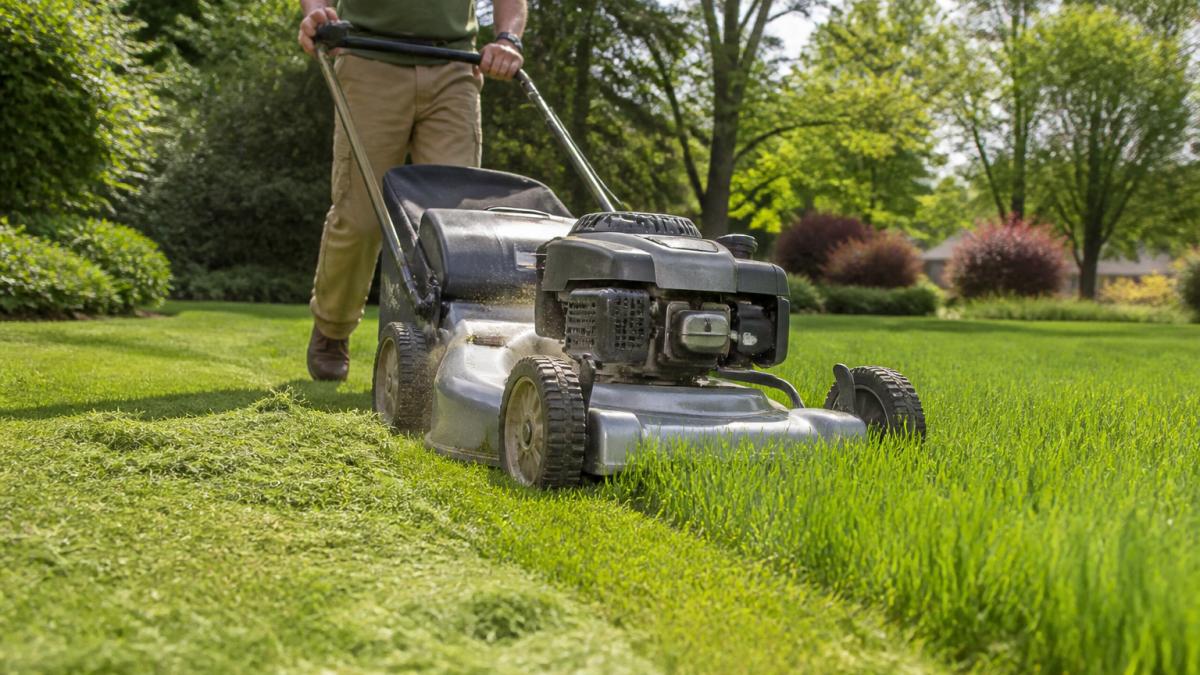
The core difference between mulching and bagging comes down to what happens to the clippings: mulching returns them to the soil, while bagging removes them entirely. Professional lawn mulching is the practice of cutting grass into fine particles that settle into the turf canopy, where they break down and feed the soil. Bagging, by contrast, collects clippings in a hopper for disposal.
What You Actually Lose When You Bag
A single mowing on a healthy lawn can produce clippings carrying a measurable share of the nitrogen the turf took up that week. Across a full growing season, returning clippings instead of bagging them is widely understood to supply a meaningful portion of a lawn's annual nitrogen requirement, enough that many extension programs describe it as a free, slow-release fertilizer application.
- Disease pressure: If turf is showing fungal disease, removing clippings can reduce the inoculum that would otherwise reinfect the lawn.
- Excessive growth after neglect: A lawn that hasn't been mowed in weeks may produce more clippings than the canopy can absorb in one pass.
- Heavy leaf drop: In fall, a thick layer of tree leaves on top of grass clippings can smother turf if left in place.
- Overseeding or renovation: Clippings can interfere with seed-to-soil contact when establishing new grass.
Outside those situations, mulching is the default best practice.
How Mulching Mowers Work
A mulching mower uses a specially shaped deck and blade to keep clippings suspended and recut them multiple times before they fall. Professional-grade equipment does this more consistently than most residential mowers because the deck geometry and blade lift are engineered for the task. The result is finer clippings that sift down to the soil surface instead of sitting on top.
The mechanism has three parts working together:
- Deck baffling. A mulching deck is closed off so air and clippings recirculate instead of exiting through a discharge chute. This keeps material in the cutting zone longer.
- Blade design. Mulching blades typically have a curved or gator-style profile that creates extra lift and a second cutting edge, chopping clippings into smaller pieces on each pass.
- Engine speed. The deck only recirculates effectively when the blade spins at its designed RPM. Drop the throttle and the lift collapses, clippings fall out whole, and you get the clumping that gives mulching a bad name.
The Practical Trade-Off
Mulching saves the labor of bagging and disposal, returns nutrients, and supports soil biology. Bagging gives you a cleaner visual finish in the short term and a tool for managing disease or heavy debris. For most residential lawns most of the year, mulching wins on cost, soil health, and time. The skill is knowing when to switch, which is why the seasonal guidance later in this article matters as much as the equipment itself.
How Mulching Improves Soil Nitrogen and Feeds Your Lawn
Mulching improves soil nitrogen by returning clippings that decompose and release nutrients back into the root zone. As microorganisms break down the clippings, nitrogen and other nutrients become available to the turfgrass. This is nutrient cycling in its simplest form, and it happens every time you mow.
The Carbon-to-Nitrogen Ratio in Grass Clippings
Fresh grass clippings have a favorable carbon-to-nitrogen ratio, which means they decompose quickly without tying up soil nitrogen. That's the key difference between clippings and tougher materials like dried leaves or wood chips, which have far higher carbon content and break down slowly. When clippings are fine and distributed evenly, decomposition happens within days.
Lawn Mulching Best Practices: Height, Frequency, and Timing
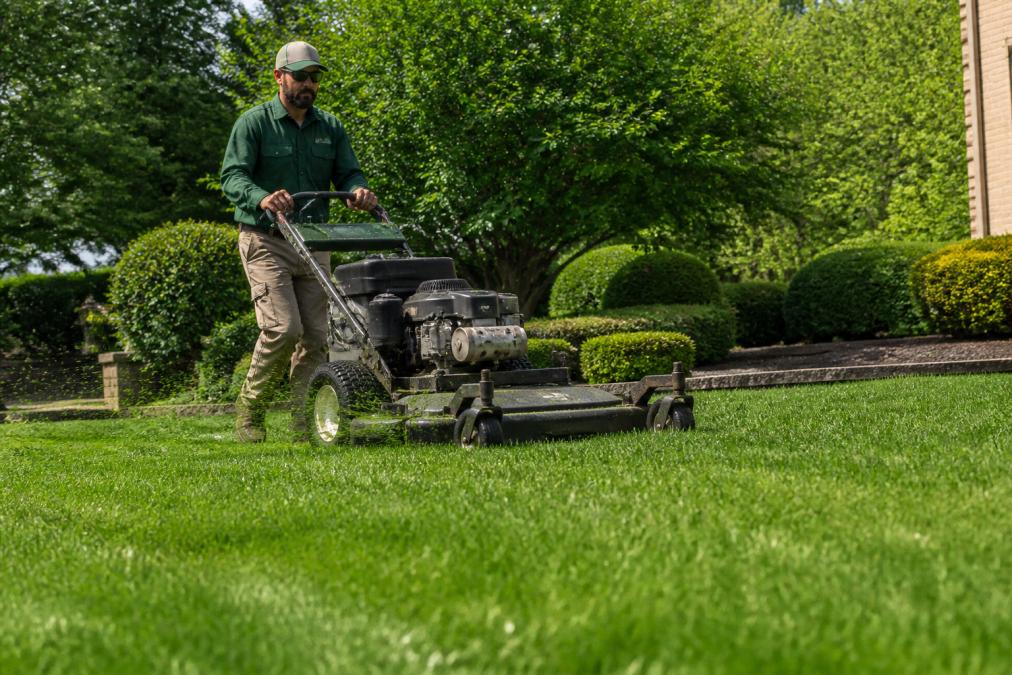
The best lawn mulching results come from following the one-third rule: never remove more than one-third of the blade height in a single cut. This keeps clippings short enough to break down quickly and prevents the smothering that causes brown patches.
Mowing Height by Grass Type
The one-third rule only works if you start from the right height. Recommended mowing heights vary by species:
- Cool-season grasses (Kentucky bluegrass, tall fescue, perennial ryegrass): typically mow at 2.5 to 3.5 inches during active growth.
- Warm-season grasses (Bermuda, zoysia, St. Augustine): Bermuda and zoysia are often kept lower, around 1 to 2 inches, while St. Augustine performs best at 2.5 to 4 inches.
- Shade-stressed turf: Raise the height by half an inch to an inch. Taller blades support more photosynthesis under low light.
Seasonal Timing and Growth Rates
Timing follows growth, not the calendar. In spring, when turfgrass grows fastest, mowing frequency may need to increase to keep pace. In summer heat, growth slows and you can stretch the interval. The mistake most homeowners make is sticking to a fixed weekly schedule regardless of how fast the grass is actually growing.
- Spring flush: Cool-season grasses can grow fast enough to need mowing every 4 to 5 days. Mulching at this frequency keeps clippings fine and manageable.
- Early summer: Growth is steady. A 5- to 7-day interval is typical.
- Mid-summer heat and drought: Growth slows dramatically. Stretch to 7 to 10 days, and raise the deck height. Stressed grass should not be cut short.
- Fall: Cool-season grasses resume growth. Return to a 5- to 7-day interval and gradually lower the height heading into winter.
- Warm-season grasses: The pattern inverts, fastest growth is mid-summer, slowest is winter dormancy, when mowing may stop entirely.
Troubleshooting Clumping and Aesthetic Issues
Clumping almost always traces back to one of three causes: cutting too much at once, mowing wet grass, or a dull blade. Fix the cause and the clumps disappear.
- Cut too much at once: Raise the mowing height gradually over several cuts instead of dropping it in one pass.
- Wet grass: Wait until the lawn is dry. Morning dew needs to burn off first.
- Dull blade: Sharpen or replace the blade. Torn clippings clump; cleanly cut ones disperse.
- Overlapping passes: Vary your mowing pattern each visit so clippings don't concentrate in the same lines.
Moisture Retention, Soil Structure, and Thatch Prevention
Mulching supports moisture retention by adding organic matter that helps soil hold water. That organic matter also improves soil structure, encouraging the microbial activity that keeps turfgrass healthy and resilient during dry spells.
Mulching wet grass is the most common cause of clumping. When clippings are heavy with moisture, they mat together and smother the grass beneath them, leaving brown spots that take weeks to recover.
Troubleshooting Clumping and Aesthetic Issues
Clumping almost always traces back to one of three causes: cutting too much at once, mowing wet grass, or a dull blade. Fix the cause and the clumps disappear.
- Cut too much at once: Raise the mowing height gradually over several cuts instead of dropping it in one pass.
- Wet grass: Wait until the lawn is dry. Morning dew needs to burn off first.
- Dull blade: Sharpen or replace the blade. Torn clippings clump; cleanly cut ones disperse.
- Overlapping passes: Vary your mowing pattern each visit so clippings don't concentrate in the same lines.
Equipment Maintenance for Professional Lawn Mulching
Equipment maintenance is where most DIY mulching efforts quietly fail. A mulching mower depends on blade sharpness, deck cleanliness, and correct engine speed to recut clippings properly.
- Sharpen blades every 20 to 25 hours of mowing, or whenever cuts look ragged
- Scrape the underside of the deck to remove built-up clippings
- Check that the mulching plug or baffle is seated correctly
- Replace air filters and spark plugs on schedule to maintain engine RPM
- Inspect blades for balance after sharpening
Cost-Benefit Analysis: Is Professional Lawn Mulching Worth It?
Professional lawn mulching is worth it for homeowners who value consistency and don't want to manage the equipment demands themselves. The cost-benefit math has two sides: what you spend on service versus what you save on fertilizer, water, and your own time.
| Factor | DIY Mulching | Professional Mulching |
|---|---|---|
| Equipment cost | Mower purchase and upkeep | Included in service |
| Time per mow | 1-2 hours | None |
| Fertilizer needs | Reduced but present | Reduced and managed |
| Consistency | Varies with your schedule | Fixed schedule |
| Blade sharpening | Your responsibility | Handled by provider |
Frequently Asked Questions
Does mulching grass clippings cause thatch buildup?
No. Thatch is a layer of dead roots, stems, and crowns that builds up between the soil surface and the grass blades. Grass clippings are mostly water and break down quickly through decomposition. When clippings are cut fine and distributed evenly, soil microorganisms digest them within a few weeks. The real causes of thatch are overwatering, compacted soil, and improper mowing height, not mulching.
How long do mulched grass clippings take to decompose?
Fine clippings from a mulching mower typically break down within one to three weeks, depending on temperature, moisture, and microbial activity in the soil. Warm, humid conditions speed decomposition, while cool or dry weather slows it. Regular mowing frequency and sharp blades produce smaller clippings that decompose faster and disappear from the lawn surface within days.
When should you choose professional mulching over bagging?
Mulching works best when grass is dry, growth is moderate, and you mow often enough to remove no more than one-third of the blade height. Bagging makes sense after heavy rain, when clippings are wet and clumpy, or when disease is present and you want to remove infected material. A professional service can assess your lawn's condition each visit and switch between mulching and bagging as needed.
How does mulching help with lawn moisture retention?
Grass clippings act as a thin organic mulch that shades the soil surface and reduces evaporation. This keeps more moisture in the root zone, which matters most during dry spells. The added organic matter also improves soil structure over time, allowing water to infiltrate deeper instead of running off. Lawns that are mulched regularly often need less supplemental watering than bagged lawns.
A healthy, polished lawn shouldn't depend on whether you have a free Saturday. If mulching, mowing heights, and blade maintenance feel like a second job, that's the signal to hand it off. EarthWise Lawn and Landscape LLC brings professional equipment, proper mowing heights, and varied patterns to every visit, so your property stays clean, healthy, and well-maintained without the guesswork. Get a quote from EarthWise Lawn and Landscape LLC and see what consistent, dependable lawn care looks like.