 ultimate-guide
Lawn Care Tips for New Homeowners: A 2026 Guide
Table of Contents
- Start With a Simple Lawn Care Schedule
- How Often Should Lawn Be Mowed? A Beginner's Guide
- Lawn Mowing Height Guide: Why Cutting Too Short Hurts Grass
- Best Time of Day to Water Grass (And How Much to Apply)
- Lawn Fertilization Schedule for Beginners
- Weed Control, Aeration, and Overseeding Basics
- Budget-Friendly Lawn Care Tips and Tool Maintenance
- Conclusion: Your First Year of Lawn Care
- Frequently Asked Questions
Last Updated: September 28, 2026
Start With a Simple Lawn Care Schedule
Lawn care tips for new homeowners start with one principle: grass responds to rhythm, not effort. A predictable schedule of mowing, watering, and feeding beats sporadic weekend heroics every time. At EarthWise Lawn and Landscape LLC, we've spent more than 30 years watching new homeowners overwater, under-mow, and then wonder why the yard looks tired by August.
The core schedule is simple. Mow weekly during the growing season, water deeply once or twice a week, fertilize on a seasonal cadence, and handle weeds before they seed. That's the whole framework.
Here's how the year breaks down:
| Task | Frequency | Season |
|---|---|---|
| Mowing | Weekly | Spring through fall |
| Deep watering | 1-2 times weekly | Growing season |
| Fertilizing | 3-4 times yearly | Spring, early summer, fall |
| Aeration | Once yearly | Early fall |
| Overseeding | As needed | Early fall |
Many homeowners find that a written schedule taped inside a garage cabinet keeps them honest. The USDA's lawn and garden guidance is a useful reference for matching timing to your regional growing season.
How Often Should Lawn Be Mowed? A Beginner's Guide
The short answer: mow once a week during active growth and every 10 to 14 days when growth slows. The one-third rule governs everything. Never remove more than one-third of the grass blade in a single cut.
That rule exists for a reason. Grass blades are the plant's solar panels. Cut too much at once, and you shock the root system, which then spends energy regrowing leaf instead of deepening roots. Scalping also opens bare patches where weeds move in.
A few practical adjustments:
- Spring flush: Growth can be aggressive. You may need to mow every five to six days.
- Summer heat: Cool-season grasses slow down. Stretch to 10 days.
- Fall: Growth picks back up. Return to weekly.
- Dormant winter: Mow only to tidy leaves and debris.
A common mistake is waiting until the lawn looks shaggy. By then you're forced into a heavy cut. Consistent, lighter mowing keeps turf health steady and clippings small enough to decompose in place.
Lawn Mowing Height Guide: Why Cutting Too Short Hurts Grass
Mowing height is the single most misunderstood setting on a mower, and it is also the one most competitors gloss over with a single number. The real rule is that height depends on your grass type and the season, not on a sticker on the deck.
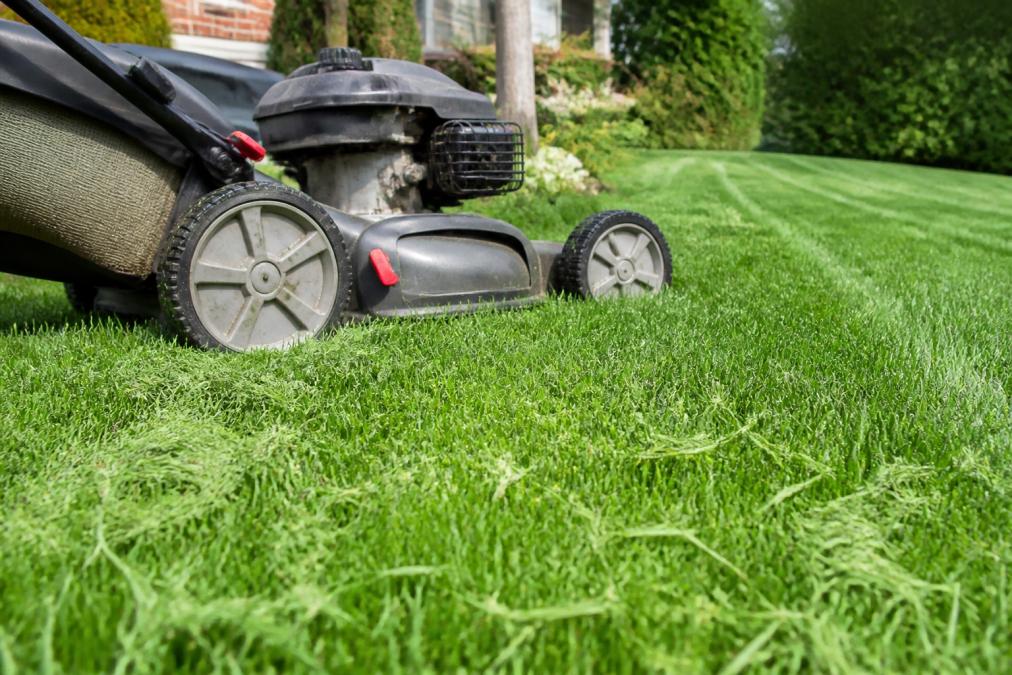
The general starting point: never cut below 3 inches for cool-season grasses and 2 inches for warm-season varieties. Taller grass shades the soil, slows evaporation, and crowds out weed seedlings. But the specifics matter more than the slogan.
Cool-season grasses (Kentucky bluegrass, tall fescue, perennial ryegrass) grow most actively in spring and fall. Keep them at 3 to 3.5 inches during active growth, and push the deck up to 3.5 to 4 inches in midsummer heat. The taller canopy shades the crown and root zone, which is what carries the plant through a July or August dry spell.
Warm-season grasses (Bermuda, zoysia, St. Augustine, centipede) prefer a lower cut during their growing season. Bermuda and zoysia typically do best at 1 to 2 inches; St.
A practical seasonal pattern for a cool-season lawn:
- Early spring: 3 inches as growth resumes.
- Late spring: 3 to 3.5 inches as the flush peaks.
- Midsummer: 3.5 to 4 inches to shade soil and reduce heat stress.
- Fall: back to 3 inches, then a final cut at 2.5 inches before dormancy to reduce snow mold risk.
Best Time of Day to Water Grass (And How Much to Apply)
Early morning is the best time of day to water grass. Between roughly 4 a.m. and 9 a.m., temperatures are low, wind is calm, and the grass blades dry before evening. That drying window matters because wet blades overnight invite disease.
Lawn Fertilization Schedule for Beginners
A lawn fertilization schedule for beginners should be built around the growing season, not the calendar on the wall. Most lawns need three to four feedings per year, and the timing matters more than the brand on the bag.
The standard cadence looks like this:
- Early spring: A light feeding as growth resumes.
- Late spring to early summer: The main nitrogen application.
- Late summer: A lighter feeding for warm-season grasses, or skip for cool-season types under heat stress.
- Fall: The most important feeding of the year for cool-season lawns. Roots are storing energy for winter.
Weed Control, Aeration, and Overseeding Basics
Weed suppression starts with thick turf, not with a spray bottle. A dense, properly mowed lawn leaves little bare soil for weed seeds to colonize. When prevention fails, a pre-emergent herbicide applied before weed seeds germinate handles most annual weeds, while spot treatment manages the stragglers.
Budget-Friendly Lawn Care Tips and Tool Maintenance
Most lawn guides tell you what to do to the grass and skip the two things new homeowners actually struggle with: keeping the equipment running and deciding what is worth paying someone else to do. This section covers both, because a dull blade or a neglected mower will undo every other tip in this article.
A simple seasonal equipment routine:
-
Start of season: sharpen or replace the blade, change the oil, replace the spark plug, clean or replace the air filter, and check tire pressure.
-
Every mow: clear clippings from under the deck. Wet clippings rust steel and clog the discharge chute.
-
Mid-season: re-check blade sharpness and oil level; tighten any loose deck bolts.
-
End of season: run the mower until the tank is empty or add fuel stabilizer, then store it dry and covered.
-
Worth doing yourself: mowing, watering, leaf mulching, spot weeding, and basic blade sharpening. These are low-risk, low-tool, and repeatable.
-
Worth paying for: core aeration (rental aerators are heavy and awkward), soil testing through a cooperative extension office, and any job that requires a commercial sprayer or a truck-mounted spreader.
-
Case-by-case: fertilization and pre-emergent weed control. A bag of fertilizer and a spreader is cheap, but getting the rate and timing wrong wastes the product and can burn the lawn.
Other low-cost habits that pay off:
- Leave grass clippings on the lawn. They return nitrogen and reduce the need for fertilizer.
- Water deeply instead of often. Fewer, longer sessions use less water overall.
- Mulch leaves into the lawn in fall rather than bagging them. Leaf litter breaks down into free organic matter.
- Keep the deck clean and the tires at the right pressure so the cut stays level.
- Winterize your equipment before storage so it starts easily in spring.
Conclusion: Your First Year of Lawn Care
Your first year of lawn care is really about building habits, not chasing perfection. Get the mowing height right, water deeply and early, feed on a seasonal schedule, and stay ahead of weeds and compaction. Those four things do most of the work.
Frequently Asked Questions
What is the 1/3 rule for lawn care?
The 1/3 rule means never remove more than one-third of the grass blade height in a single mowing. If your lawn is 3 inches tall, cut it to no less than 2 inches. Following this rule keeps grass roots strong, reduces stress, and helps the lawn recover faster. It also limits the amount of clippings left behind, which breaks down naturally and returns nitrogen to the soil. New homeowners should measure grass height before every mow to stay within this guideline.
How often should I water my new lawn?
Newly seeded or sodded lawns need daily watering for the first two weeks, then every other day for the next two weeks. After that, shift to deep watering once or twice a week, applying about 1 inch of water each session. Early morning is the best time of day to water grass because it reduces evaporation and lets blades dry before evening, which helps prevent disease. Adjust based on rainfall and soil type.
When is the best time to fertilize a residential lawn?
For cool-season grasses, fertilize in early fall and again in late spring. Warm-season grasses respond best to feeding in late spring and midsummer. A beginner-friendly lawn fertilization schedule starts with a soil test to check pH and nutrient levels, then applies nitrogen fertilizer at the rate on the bag. Avoid fertilizing during extreme heat or drought, and water lightly after application to move nutrients into the soil.
What are the most common lawn care mistakes new homeowners make?
The biggest mistakes include cutting grass too short, watering lightly and often instead of deeply and infrequently, skipping soil aeration, and ignoring weed suppression until weeds take over. Many beginners also mow with dull blades, which tears grass instead of cutting it cleanly. Following a lawn care schedule and sharpening mower blades every 20 to 25 hours of use prevents most of these problems.
What is the 150 rule for lawns?
The 150 rule helps you decide when to water by adding the day's high temperature to the last rainfall amount in inches. If the total reaches 150, it is time to irrigate. For example, if the high was 85°F and you received 0.5 inches of rain, the total is 85.5, so you would wait. This simple check prevents overwatering and keeps grass roots healthy during the growing season.
How do I handle lawn pests and diseases as a beginner?
Start by identifying the problem before treating it. Brown patches, chewed blades, or thin spots can point to insects, fungus, or compaction. A soil test and a close look at the grass blade help narrow it down. For many lawn pests, keeping grass at the right mowing height, watering deeply but infrequently, and dethatching when needed reduces outbreaks. If damage spreads, a professional can diagnose and treat the specific issue.