 Listicle
Best Lawn Mower for Small Yards in 2026: Top Picks
Last Updated: November 21, 2026
Quick Summary
For most small yards, a battery push or self-propelled mower with a 16 to 22 inch cutting width is the best choice, since battery models start with a button and need no fuel or oil. Robotic mowers suit owners who want no hands-on mowing, as long as the lawn falls within the coverage area.
- Measure your lawn first, then choose a cutting width that finishes in one pass.
- A 16 to 17 inch deck suits yards under about one-eighth acre and gates narrower than 36 inches.
- A 20 to 22 inch deck needs roughly 40 inches of clearance to turn comfortably.
- Battery runtime drops in tall, wet, or thick grass and on slopes, so plan for worst-case mows.
- Compare kit prices, since a low-priced tool-only mower can cost more once you add a battery.
Table of Contents
- Best Lawn Mower for Small Yards: Our Top Picks for 2026
- Quick Comparison: Ranked Mowers for Small Yards at a Glance
- Best Battery Lawn Mower for Small Yards
- Best Gas Lawn Mower for Small Yards and When Gas Still Makes Sense
- Best Self-Propelled Lawn Mower for Small Yards and Robotic Options
- Best Lawn Mower for Very Small Lawns: Push and Reel Options
- How We Evaluated These Mowers and Total Cost of Ownership
- Choosing Your Small-Yard Mower and Booking a Professional Mowing Service
- Frequently Asked Questions
Best Lawn Mower for Small Yards: Our Top Picks for 2026
Small yards need a different kind of mower than large properties. A compact cutting deck, easy maneuvering around beds and fences, and a footprint that fits in a garage shed all matter more than raw cutting capacity. At EarthWise Lawn and Landscape LLC, we know that the right mower depends on your yard's layout, your grass type, and how often you can realistically mow.
Here is what we recommend. Our pick for most small-yard owners who want to do the work themselves is a battery push or self-propelled mower with a cutting width between 16 and 22 inches. Robotic mowers suit owners who want zero hands-on mowing, provided the yard falls within the stated coverage area. Gas mowers still make sense for larger small yards or for owners who already own a gas platform.
A common mistake is buying for the yard you wish you had rather than the one you have. We recommend measuring your lawn first, then choosing a cutting width that lets you finish in one pass without constant turning.
Quick Comparison: Ranked Mowers for Small Yards at a Glance
| Mower | Type | Cutting Width | Coverage / Best For | Starting Price |
|---|---|---|---|---|
| Dreame A3 AWD 2000 | Robotic | Not stated | Up to 0.50 acres | $2,199.99 |
| Dreame A3 AWD 1000 | Robotic | Not stated | Up to 0.25 acres | $1,999.99 |
| EGO LM2236SP POWER+ 1000 | Battery, self-propelled | 22 inches | Wider cut, convenience | Not stated |
| Greenworks 60V 17-inch | Battery | 17 inches | Small to average yards | Not stated |
| Greenworks 40V 16-inch Push | Battery, push | 16 inches | Very small, frequent mowing | Not stated |
| Ryobi 40V HP Brushless | Battery | Not stated | Lower-priced 40V option | Not stated |
| Toro 60V Max Super Recycler | Battery | Not stated | Toro battery option | Not stated |
| Fiskars StaySharp Max | Reel, manual | 18 inches | No motor, no battery | Not stated |
Check current pricing directly with the manufacturer or retailer before buying.
Best Battery Lawn Mower for Small Yards
Battery mowers are the most practical choice for most small yards. They start with a button, produce no exhaust, and avoid the refueling and oil changes that gas models need. The decision that actually matters is not brand, it is whether the deck width, the battery platform, and the runtime match your lawn.
Match the deck to the layout first. A 16- to 17-inch deck is the sweet spot for yards under about one-eighth acre, narrow side strips, and gates narrower than 36 inches.
The Greenworks 60V 17-inch mower is a fit for small to average-sized yards. Confirm how many minutes a single charge lasts for your lawn before buying.
The EGO LM2236SP POWER+ 1000 Series is the choice for owners who want a wider cut. Wirecutter's lawn mower review recommends it for convenience, runtime, cutting quality, and value. A 22-inch deck covers ground faster, though it may feel bulky in very tight spaces.
The Greenworks 40V 16-inch push mower is the value pick for very small lawns mowed frequently. Its narrow cut works along fences and in tight corners, and the 40V platform shares batteries with other Greenworks 40V yard tools.
The Ryobi 40V HP Brushless is the lower-priced 40V option and shares the Ryobi 40V battery platform, which matters if you already own Ryobi 40V trimmer or blower batteries. The Toro 60V Max Super Recycler is the Toro battery option for owners already in that ecosystem.
**Runtime depends on conditions, not just the spec sheet. Runtime generally drops in tall, wet, or thick grass and on slopes. Plan for a battery that covers your worst-case mow, not your best-case one.
Battery ecosystem is the hidden cost. Check whether the battery and charger are included or sold separately, because buying a second battery can add significant cost.
Watch out: a mower sold as "tool only" at a low price can cost more than a kit once you add a battery and charger, so compare kit prices, not bare-tool prices.
Best Gas Lawn Mower for Small Yards and When Gas Still Makes Sense
Gas mowers still have a place in small-yard care. They refuel in seconds and keep working through long sessions. They also need oil changes, spark plug replacement, and regular fuel care, and they are louder and produce exhaust.
Gas makes sense if you already own a gas platform for other equipment, if your yard has rough or thick grass that a battery struggles with, or if you mow a larger small yard in a single long session. For most homeowners with a yard under about a quarter acre, a battery model will be simpler to live with.
Our research did not verify specific gas models with pricing or runtime, so we are not naming one here. If gas is your choice, compare cutting widths and engine reviews from current sources.
Best Self-Propelled Lawn Mower for Small Yards and Robotic Options
Self-propelled mowers reduce push effort, which matters on slopes and for owners who mow often. The EGO 22-inch model above is a self-propelled option, and the Dreame A3 robotic mowers remove mowing from your schedule entirely. The choice between them comes down to physical effort, slope, and how much hands-on time you want to give up.
Self-propelled: match the drive to the slope. Front-wheel drive is lighter and easier to turn on flat, obstacle-heavy lawns. Rear-wheel drive digs in better on slopes and thick grass but is heavier to maneuver around beds. For a small yard with a slope steeper than about 15 degrees, rear-wheel drive is usually the better fit; for a flat yard with many turns, front-wheel drive is easier on the arms.
Robotic: coverage area is the first filter. These are substantial upfront purchases, so weigh the price against the mowing time you would avoid. Before buying, measure your lawn accurately, since a robot mower outside its coverage area will not finish the job.
Storage and handling are the gap most guides skip. Measure your shed or garage opening and the folded footprint of any mower before buying. Self-propelled and robotic units are heavier and bulkier than push mowers, and a robotic dock needs a level spot with access to power. If you store the mower in a basement or apartment closet, weight and folded dimensions matter more than cutting width.
Accessibility and physical effort. For owners with limited strength or mobility, compare starting method (button vs. pull), control type (bail bar vs. lever), and push effort. Self-propelled mowers reduce push effort but add weight to lift; robotic mowers remove mowing effort entirely but require setup and occasional blade checks.
Noise and neighborhood fit. Battery and robotic mowers are quieter than gas, which matters in close-set homes and for mowing at different times of day. Check any local noise restrictions before choosing a gas or high-powered battery model.
Edging matters here too. Robotic and self-propelled mowers rarely trim along walkways or beds, so plan on a separate edger or trimmer for those edges.
Best Lawn Mower for Very Small Lawns: Push and Reel Options
For very small lawns, a push mower or reel mower is often the best value. The Greenworks 40V 16-inch push mower is recommended in our research for yards under one-eighth acre that you mow frequently. Its narrow cutting width works well in tight spaces and along fences.
The Fiskars StaySharp Max reel mower uses no motor and no battery. Its 18-inch cutting system is described as not requiring blade sharpening. Reel mowers take physical effort, so they suit owners who are comfortable pushing the mower and who keep grass short.
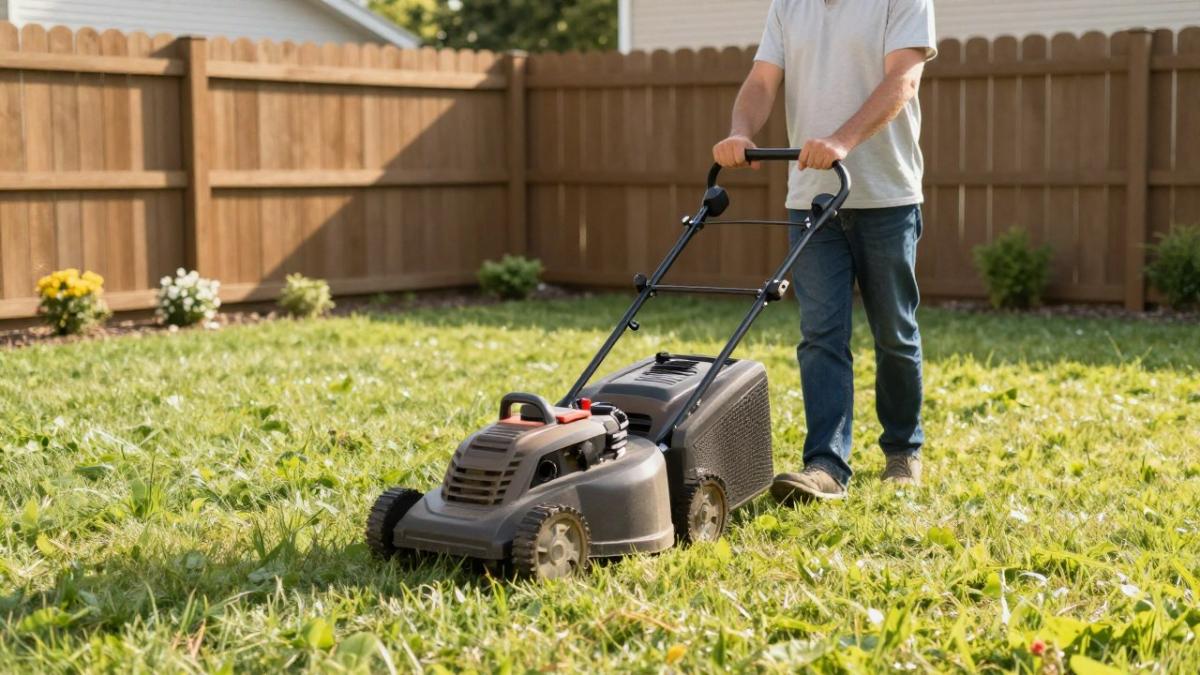
A homeowner pushing a compact lawn mower across a small, neatly edged suburban backyard lawn on a sunny morning.
How We Evaluated These Mowers and Total Cost of Ownership
We ranked these mowers using published specifications and reviews from current guides, including Wirecutter's lawn mower review and TechGearLab's best lawn mower roundup. Where a price, runtime, or cutting width was not supplied in the source material, we say so rather than estimate it.
Total cost of ownership goes beyond the sticker price. Battery mowers add the cost of spare batteries and eventual replacement. Gas mowers add fuel, oil, and maintenance. Robotic mowers add their upfront price plus any boundary-wire or maintenance costs. Reel mowers have the lowest running cost but the highest physical effort.
Mowing height matters for grass health as well. Keep the cut high enough that you remove no more than about one-third of the blade length in a single mow. University of Minnesota Extension guidance on mowing height offers useful background on setting heights for common turf grasses.
Choosing Your Small-Yard Mower and Booking a Professional Mowing Service
Start by measuring your lawn, noting slopes, obstacles, and edges. Then choose the mower type that matches how much time and effort you want to spend. If you decide a mower is not for you, a professional service can handle the work on a set schedule. EarthWise Lawn and Landscape LLC provides consistent mowing with proper heights, sharp blades, and varied patterns, and you can request a quote through our website.
The most reliable results come from matching the tool to the yard. Before booking a hired service, you can read how to choose a reliable local lawn care company and what to check first. If you want a professional to take over, the Lawn Care Guide from the National Association of Landscape Professionals is a helpful reference for understanding what to expect from a mowing contract.
Frequently Asked Questions
What is the best mower for a small yard?
For most small yards, a battery push or self-propelled mower with a cutting width of about 16 to 20 inches balances maneuverability and convenience. Battery models avoid refueling and oil changes, and they run quietly. Gas models still suit owners who mow large areas often or need longer runtime without recharging. Match the cutting width and drive style to your lawn size, layout and how often you mow, and check whether the mower's listed coverage area fits your yard before buying.
What is the best lawn mower for a very small lawn?
A narrow push mower, such as a 16-inch battery model, is usually the best fit for a very small lawn. Its compact deck reaches tight corners, around landscaping beds and along fences, and it is light enough to store in a shed or garage. Manual reel mowers also work well on very small, flat lawns that are mowed frequently, since they need no battery or fuel. Choose a model with adjustable cutting height so you can keep the grass at a healthy length.
Is a gas or battery lawn mower better for a small yard?
A battery mower is usually the better choice for a small yard. It starts with a button, produces no exhaust, runs quietly and requires little maintenance beyond blade care. A gas mower is better if you mow large areas, tall or thick grass, or want runtime that does not depend on charging. For a typical small yard, the decision often comes down to convenience and storage.
Is a self-propelled mower worth it for a small yard?
A self-propelled mower is worth considering if you have a slope, a lot of turns around obstacles, or limited upper-body strength. The drive system pulls the mower forward, reducing push effort. On a flat, small yard with few obstacles, a basic push mower is often enough and costs less. Compare the upfront price with the physical effort you expect to save each week before deciding.