 How-to
Does Consistent Lawn Maintenance Boost Property Value?
Last Updated: November 4, 2026
Quick Summary
Consistent lawn maintenance protects the value you already have rather than adding a fixed dollar amount to your sale price. Regular care improves curb appeal, listing photos and buyer confidence, which supports marketability at the negotiating table. Treat any resale premium as a possible bonus, not a guaranteed payout.
- Mow every 5-7 days in peak growth and every 10-14 days during dry spells.
- Never cut more than one-third of the blade height in a single pass.
- Water about 1-1.5 inches per week in one or two early-morning sessions.
- Sharpen or replace mower blades several times per season to avoid torn, diseased tips.
- More than 10 grubs per square foot of turf warrants treatment.
Table of Contents
- How Consistent Lawn Maintenance Affects Property Value
- Your Seasonal Lawn Care Checklist for a Well-Maintained Yard
- Building a Lawn Mowing Schedule That Keeps Grass Healthy
- Lawn Weed Control and Fertilizing for Consistent Growth
- The Real Cost of Lawn Maintenance: DIY vs. Professional Care
- How to Measure Lawn Care ROI Without Overpaying for Claims
- Common Lawn Care Mistakes That Undercut Your Investment
- Get a Quote and Lock In a Maintenance Plan That Protects Value
- Frequently Asked Questions
How Consistent Lawn Maintenance Affects Property Value
Consistent lawn maintenance is the practice of caring for a yard on a regular, predictable schedule rather than in occasional bursts of effort.
A lawn that gets mowed every week looks different from one that gets mowed whenever someone remembers. The first reads as a cared-for home. The second reads as a question mark.
Here's the honest version up front: a healthy lawn won't add a fixed dollar amount to your sale price. Real estate appraisers don't work that way.
Curb Appeal and the First Impression Buyers Get
Buyers form an opinion before they leave the car. A neat appearance at the curb sets the tone for everything that follows.
That first impression is hard to reverse. If the grass is shaggy and the edges are ragged, a buyer walks in expecting deferred maintenance everywhere else. They start hunting for problems.
The effect isn't just emotional. Listing photos with a vibrant lawn get more clicks, which means more showings, which means more chances at a strong offer. Marketability starts at the sidewalk.
What the Resale Premium Actually Reflects
Most claims about lawn care and resale value are oversold. You'll see headlines promising a big return on every landscaping dollar. Treat those with suspicion.
What the resale premium really reflects is presentation and condition, not grass itself. A well-manicured lawn makes the whole property read as maintained.
If you own or are considering a high-value property, the stakes are higher because buyers expect a polished outdoor space. Our lawn care guide for high value homes shows how professional care protects resale value.
Your Seasonal Lawn Care Checklist for a Well-Maintained Yard
A year-round plan beats a spring scramble every time, but the plan has to fit your grass and your climate. The checklist below is organized by season and then adapted for cool-season grasses (fescue, bluegrass, ryegrass) and warm-season grasses (Bermuda, zoysia, St. Augustine).
Spring (soil consistently above 50°F for cool-season; above 65°F for warm-season)
- Rake out winter debris and matted patches before new growth starts
- Sharpen mower blades before the first cut, dull blades tear grass and invite disease
- Apply pre-emergent weed control when soil warms to about 55°F (forsythia bloom is a common phenology indicator)
- Set the mower deck to the tall end of the range for your grass type: 3-3.5 inches for cool-season, 1.5-2.5 inches for warm-season
- For warm-season lawns, wait until green-up is complete before the first mow; mowing dormant turf stresses it
Summer (peak growth for warm-season; heat-stress period for cool-season)
- Mow on a fixed schedule, every 5-7 days in peak growth, stretching to 10-14 days in dry spells
- Water deeply and infrequently: about 1-1.5 inches per week, delivered in one or two early-morning sessions
- Spot-treat weeds before they seed; post-emergent sprays work best on young, actively growing weeds
- Check for grubs by pulling back a square foot of turf, more than 10 grubs warrants treatment
- For cool-season lawns, raise the mower deck to 3.5-4 inches to shade soil and reduce heat stress
Fall (root-building season for cool-season; transition for warm-season)
- Aerate and overseed cool-season lawns when soil temperatures drop to 55-65°F
- Rake leaves so grass isn't smothered, a thick leaf layer can kill turf within weeks
- Fertilize cool-season lawns to build root reserves; for warm-season lawns, fertilize no later than 6-8 weeks before the first expected frost
- Lower the final cut of the season by about half an inch to reduce winter damage and snow mold
Winter (dormancy for warm-season; slow growth for cool-season)
- Stay off frozen turf, foot traffic on frozen grass breaks blades and compacts soil
- Service equipment: change oil, replace spark plugs, sharpen or replace blades
- Plan next year's budget and schedule, including any professional service contracts
- For warm-season lawns, avoid all traffic and mowing during full dormancy
The pattern matters more than any single task. Consistent care across all four seasons is what produces a lawn that looks the same in June as it did in April.
Here are the seasonal timing windows and targets the checklist sets out.
| Season | Task | Timing or spec |
|---|---|---|
| Spring | Apply pre-emergent weed control | Soil warms to about 55°F |
| Spring | Set mower deck height | 3-3.5 inches cool-season; 1.5-2.5 inches warm-season |
| Summer | Mow on a fixed schedule | Every 5-7 days peak growth; 10-14 days in dry spells |
| Summer | Water deeply and infrequently | About 1-1.5 inches per week |
| Summer | Check for grubs | More than 10 grubs per square foot warrants treatment |
| Summer | Raise deck for cool-season lawns | 3.5-4 inches |
| Fall | Aerate and overseed cool-season lawns | Soil temperatures 55-65°F |
| Fall | Final cut of the season | Lower by about half an inch |
Building a Lawn Mowing Schedule That Keeps Grass Healthy
The right lawn mowing schedule follows growth, not the calendar on your wall. In peak spring growth, that can mean mowing every five to seven days.
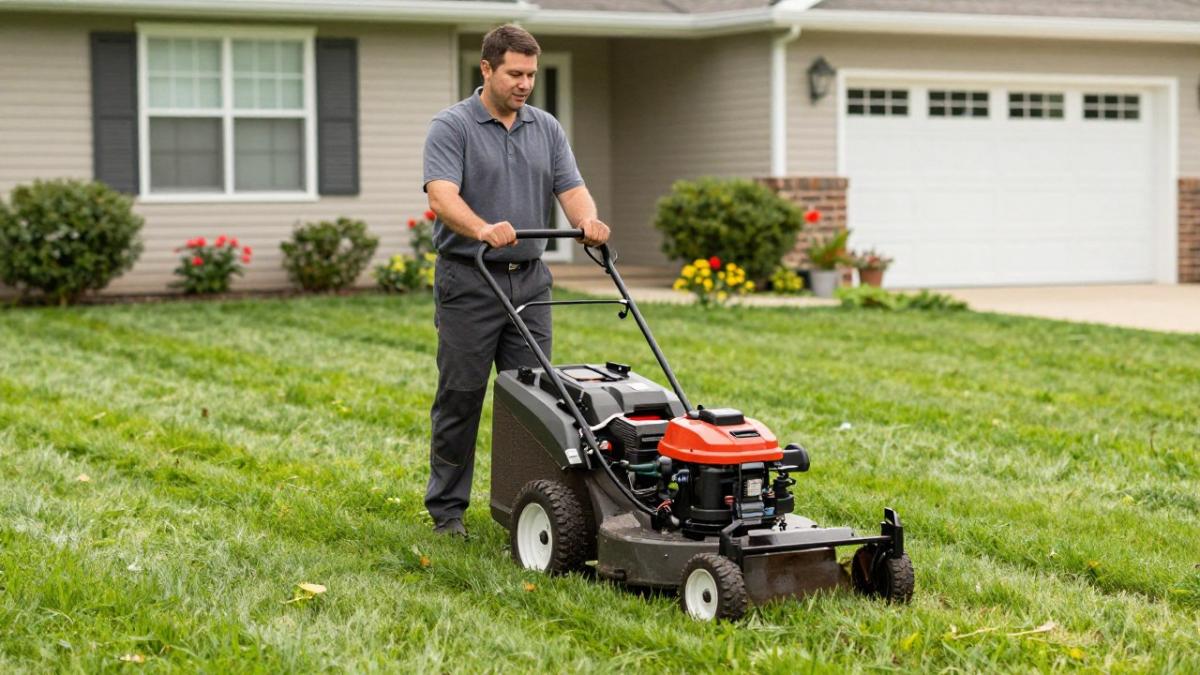
The rule of thumb: never cut more than one-third of the blade height in a single pass.
If you need help setting the right interval for your yard, our guide on how often should lawn be mowed breaks down the timing by season and grass type.
Mowing Height, Sharp Blades, and Pattern Rotation
Three details separate a professional-looking cut from an amateur one.
Height. Set the deck high. Taller grass shades the soil, crowds out weeds, and grows deeper roots. Scalping is the single most common DIY mistake.
Sharp blades. A dull blade tears grass instead of slicing it. Torn tips turn brown and invite disease. Sharpen or replace blades several times per season.
Pattern rotation. Mow in a different direction each visit. For specific heights by grass type, see our guide to proper lawn mowing heights.
Lawn Weed Control and Fertilizing for Consistent Growth
Weed control and feeding work as a pair. Fertilizer strengthens the grass so it can outcompete weeds.
Timing is everything. Pre-emergent products need to go down before weed seeds germinate, which means early in the season for most lawns.
Fertilizing follows the same logic. Feed at the right points in the growing cycle and you build thick, healthy growth.
A common mistake is treating weeds and skipping the feed. You'll win a battle and lose the war.
The Real Cost of Lawn Maintenance: DIY vs. Professional Care
Here's the question every homeowner asks: is it cheaper to do it myself? The answer depends on what you count.
DIY costs are easy to underestimate. Add up the mower, trimmer, edger, fuel, blade sharpening, fertilizer, weed control, and your weekends. Then count the hours. A typical suburban yard eats several hours a week in peak season.
Professional lawn care costs more on the invoice line. What you get back is time and consistency.
We won't quote you a number here, because pricing depends on lot size, terrain, and how much detail your yard needs. For a detailed cost breakdown comparing doing it yourself versus hiring a pro, see our DIY lawn care vs professional service cost guide.
How to Measure Lawn Care ROI Without Overpaying for Claims
Treat lawn care ROI as a range, not a promise. Anyone who hands you an exact percentage is guessing.
Step 1: Log your true annual spend. Most homeowners underestimate this. A typical DIY budget for a quarter-acre lawn includes:
- Mower, trimmer, and edger: equipment costs vary widely by model and should be checked against current retail prices
- Fuel, oil, and blade sharpening or replacement
- Fertilizer and weed control, depending on lawn size and product choice
- Water, which varies with climate and irrigation needs
Professional pricing depends on lot size, terrain, frequency, and the services included.
Step 3: Interpret value claims with skepticism. Published resale figures often come from broad surveys, not your street. They describe a trend, not a guarantee.
Watch out: don't count on a specific resale premium to justify a lawn care budget.
Regional and Grass-Type Differences That Change the Math
A schedule that works in one climate can wreck a lawn in another, and the cost of care varies with it. Cool-season grasses like fescue and bluegrass peak in spring and fall, when mowing frequency and fertilizer needs are highest.
Water matters too. In dry regions, drought-tolerant approaches and smart irrigation save money and keep turf alive; in humid regions, the battle shifts to fungus and disease, which can add fungicide costs.
Common Lawn Care Mistakes That Undercut Your Investment
The fastest way to waste money on a lawn is to make the same mistake every week. These are the ones we see most.
- Scalping the lawn to stretch time between cuts
- Mowing with dull blades and browning the tips
- Cutting on a random schedule instead of a fixed one
- Watering shallowly and often instead of deep and infrequent
- Skipping fall feeding, which weakens spring growth
- Letting leaves sit through winter and smother the turf
- Treating weeds without feeding the grass
Watch out: scalping in summer heat can damage turf, and recovery takes time.
Get a Quote and Lock In a Maintenance Plan That Protects Value
The gap between a lawn that helps your property and one that hurts it comes down to consistency.
At EarthWise Lawn and Landscape LLC, we've built our work on more than 30 years of hands-on experience and a family tradition rooted in hard work and integrity.
If you're ready to see what a dependable schedule looks like, request a quote from EarthWise Lawn and Landscape LLC. Our guide on getting professional lawn maintenance quotes walks you through requesting and comparing estimates.
Frequently Asked Questions
How does lawn maintenance affect property value?
A well-maintained lawn improves curb appeal, which is the first thing buyers notice. Consistent mowing, edging, fertilizing, and weed control signal that a home has been cared for, and that perception can support a stronger asking price and faster sale. The effect is strongest when lawn care is paired with tidy landscaping, clean walkways, and a presentable exterior. Treat lawn maintenance as one part of overall home presentation rather than a guaranteed dollar-for-dollar return.
How often should a lawn be mowed to keep it looking its best?
Most cool-season grasses do well on a weekly schedule during active growth, while warm-season grasses may need mowing every 5 to 7 days in peak summer. The practical rule is to remove no more than one-third of the blade height at a time. A lawn mowing schedule that adjusts with the season, slower in spring and fall and more frequent in summer, keeps grass healthier and the surface looking even.
What is included in a typical lawn care checklist?
A solid lawn care checklist covers mowing at the right height with sharp blades, trimming and edging along walks and beds, blowing clippings off hard surfaces, seasonal fertilizing, and lawn weed control for broadleaf and grassy weeds. It should also include periodic soil checks, aeration when compaction builds up, and minor cleanup of leaves and debris. Following the same checklist each visit is what produces a consistent, well-manicured look.
Is professional lawn care worth the cost of lawn maintenance compared with doing it myself?
Compare the full cost, not just the mowing price. DIY means buying and maintaining equipment, fuel, blades, fertilizer, and weed control, plus several hours a week during growing season. Professional service bundles labor, equipment, and scheduling. For busy households, professional care may be worth comparing against your own time and costs. Request a quote to compare against your own numbers.
Your lawn is either building confidence in your property or raising questions about it. There's no neutral. Get started with EarthWise Lawn and Landscape LLC and lock in consistent, professional care that keeps your yard looking its best all season.